Mosaic team building is more than just a creative leisure activity; it is a powerful tool for team synchronization through collective creation. Unlike standard quests or receptions, working with materials engages fine motor skills and shifts the brain into a state of deep immersion (the flow state). This format allows employees to see clearly how their individual contribution, even the smallest fragment, forms a unified, large-scale, and aesthetically valuable result.
Why Mosaic Team Building is Becoming a Corporate Culture Trend
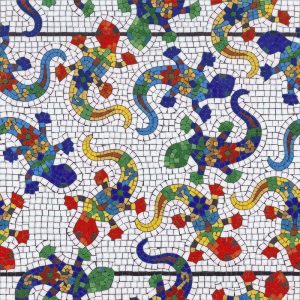
The popularity of this direction is explained by a profound metaphor: a company is a giant puzzle where each employee is a unique tessera (a mosaic element). When people create a work of art together, they go through a process of collective decision-making and mutual support. Consider the Trencadís technique popularized by Antoni Gaudí in Park Güell: it is based on using broken ceramics, symbolizing the transformation of chaos and debris into a harmonious structure. In a corporate context, it works the same way: disparate departments unite for a common goal.
Psychologically, working with mosaics reduces stress and burnout. The process of selecting colors and shapes of fragments requires concentration, acting as a form of meditation. Moreover, unlike digital tasks, there is a tangible physical result. If the classical Opus Tessellatum technique is used, where smalti squares are laid in even rows, the team learns discipline and precision. If a free style is chosen, creativity and thinking outside the box are encouraged, which is crucial for marketing and development departments.
Individual Workshops: From Byzantine Smalti to Florentine Style
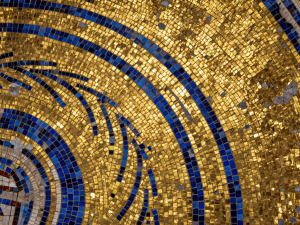
For small teams or departments, intimate workshops where each person creates their own object are ideal. Here, employees can be introduced to various historical techniques. For example, Byzantine mosaics using gold smalti emphasize status and a pursuit of perfection. The Florentine style, characterized by the finest detailing and the use of natural stone, is suitable for those who value jewelry-like precision and patience. The instructor provides blanks, adhesives, and tools: nippers, pliers, and spatulas.
Within this format, creating corporate accessories can be offered: coffee coasters, logo panels, or even notebook covers. It is important that each participant goes through the journey from sketch to final grouting. For instance, using the Opus Sectile technique (inserting large marble shapes) allows for the creation of more concise and modern forms. This approach develops each employee’s individuality within the framework of a single shared event, creating a sense of belonging to the group without the pressure of needing to work in close contact with others.
Creating a Collective Panel: A Monumental Approach and Team Spirit
The most large-scale format is the creation of a single corporate panel. The process resembles assembling a giant puzzle. First, an artist or AI designer creates a general image (for example, the company’s mission or its symbol), which is then divided into equal squares. Each employee or micro-group receives their fragment and a set of materials. They do not know which part of the overall picture they are creating, but they must strictly adhere to the given color palette and scheme. This is a perfect illustration of how the work of one link affects the quality of the entire project.
Drawing inspiration from Soviet mosaics of the 1960s and 70s, which were characterized by monumentality and the use of raw concrete and smalti, an object can be created that will remain in the office for decades. When all parts are joined into a whole, the team experiences a powerful emotional surge. This moment of “assembly” is the culmination of the team building. If the Matrix mosaic technique is used, where the image is built on a grid, the process becomes more structured and understandable even for those who have never held an artist’s tools.
Digital Transformation: Online Mosaics and AI Generation
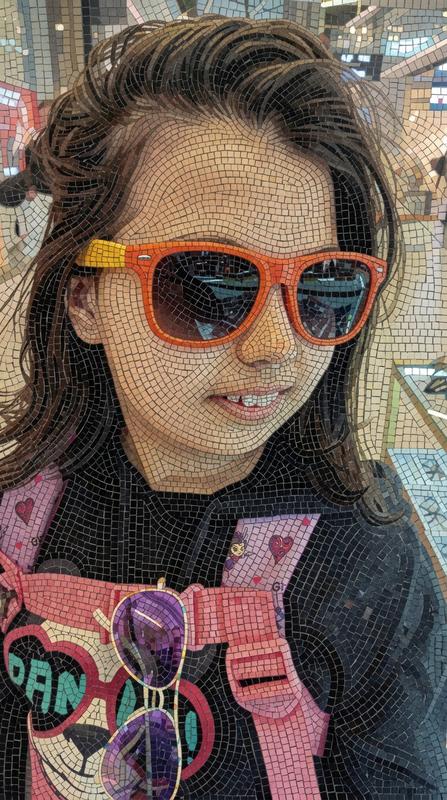
For distributed teams working remotely, traditional workshops are inaccessible, but technology comes to the rescue. Modern mosaic team building can be moved into the digital plane. Using AI tools such as Classical AI or MELTI mosaic, any corporate photo or logo can be turned into a detailed mosaic scheme. The team can collaborate on a digital canvas in real-time, choosing elements and colors through a special interface, turning the process into a kind of strategic game.
Moreover, a hybrid format can be organized: AI generates a sketch, which is then sent to participants in different cities as creative kits. Each person assembles their part at home and then sends it to the central office for final assembly. This creates a physical connection between employees separated by thousands of kilometers. The use of algorithms allows for the creation of incredibly complex patterns that would take weeks to draw by hand, enabling the team to focus specifically on creativity and interaction rather than routine drafting.
Organizational Nuances and Budget: From Materials to Logistics
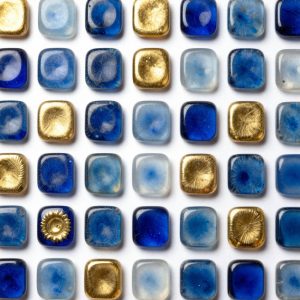
Organizing such an event requires attention to detail. First, a location must be chosen: the room should be spacious, with good lighting and ventilation, as working with glue and grout can be accompanied by specific odors. The list of necessary materials includes: smalti (glass with metal oxides), ceramic tiles, natural stone, cement- or polymer-based adhesive, grouting mixtures, and safety goggles for glass cutting.
Costs for such events vary. A simple workshop for creating small objects costs on average from 2,000 to 5,000 rubles per person, including materials and the instructor’s work. The creation of a large-scale collective panel is priced individually: here, the cost depends on the size of the canvas (e.g., 2×3 meters) and the quality of materials. The budget can start from 50,000 and go up to several hundred thousand rubles. It is important to allow time for the works to “dry”—if the panel is created in the office, a special stand or wall will be needed to fix the object for 24-48 hours.
What the Company Gains: Psychological Effect and Material Asset
The result of such team building is not only a beautiful object in the office interior but also qualitative changes in the team’s climate. Employees develop the “patience of a creator”—the ability to move toward a goal step by step without expecting an instant result. This is especially useful for project teams working on long-term tasks. Furthermore, collective creativity breaks down hierarchical barriers: when the CEO and a junior specialist together select shades of blue for one fragment, an atmosphere of equality and trust emerges.
Related works in the gallery:
The material asset in the form of a mosaic panel serves as a constant reminder of the period of unification. Every time they pass by it, an employee remembers their contribution to the common victory. This creates the so-called “Endowment Effect,” where people value an environment more when they have taken a direct part in its creation. In the end, the company gains a loyal team and a unique art object that emphasizes its creativity and care for people, turning an ordinary workspace into a gallery of achievements.
If you want to pre-visualize ideas for your corporate event or create unique mosaic sketches using artificial intelligence, try the service andamento.app.