Mosaic in landscape design transforms an ordinary garden plot into a work of art, combining the durability of stone with the expressiveness of painting. Unlike standard paving slabs, mosaic panels and pathways allow for the integration of complex narratives, a play of color, and unique textures into the space. A modern approach to decorating open spaces blends ancient traditions with cutting-edge AI-generated pattern technology, offering garden owners limitless opportunities for creativity and personalization.
Aesthetics and Functionality: Mosaic in Landscape Design
The use of mosaic in landscape design allows for addressing two goals simultaneously: creating a durable surface and establishing visual accents. Garden paths executed in the Opus Tessellatum technique, which utilizes small square cubes, become the central element of the composition. Instead of monotonous gray concrete, one can design “carpet” paths with floral ornaments or geometric patterns that guide the visitor’s gaze toward key points in the garden, creating a curated walking route. Particular attention should be paid to the decoration of planters and flowerbeds: cladding their edges with smalt or ceramic mosaics protects the material from erosion, prevents soil washout, and lends the garden a Mediterranean flair.
To create dynamic compositions, the Trencadís technique, popularized by Antoni Gaudí in Barcelona, is often employed. This method involves using shards of ceramic tiles and pottery, making it ideal for decorating curved surfaces such as the edges of raised beds, the bases of garden benches, or the rounded forms of gazebos. This approach allows for the integration of vibrant splashes of color that contrast with the lush greenery of foliage and the bright blooms of perennials, creating a vivid, emotional, and slightly eccentric look that attracts attention in any season.
Stylistic Solutions: From Mediterranean Chic to Japanese Minimalism
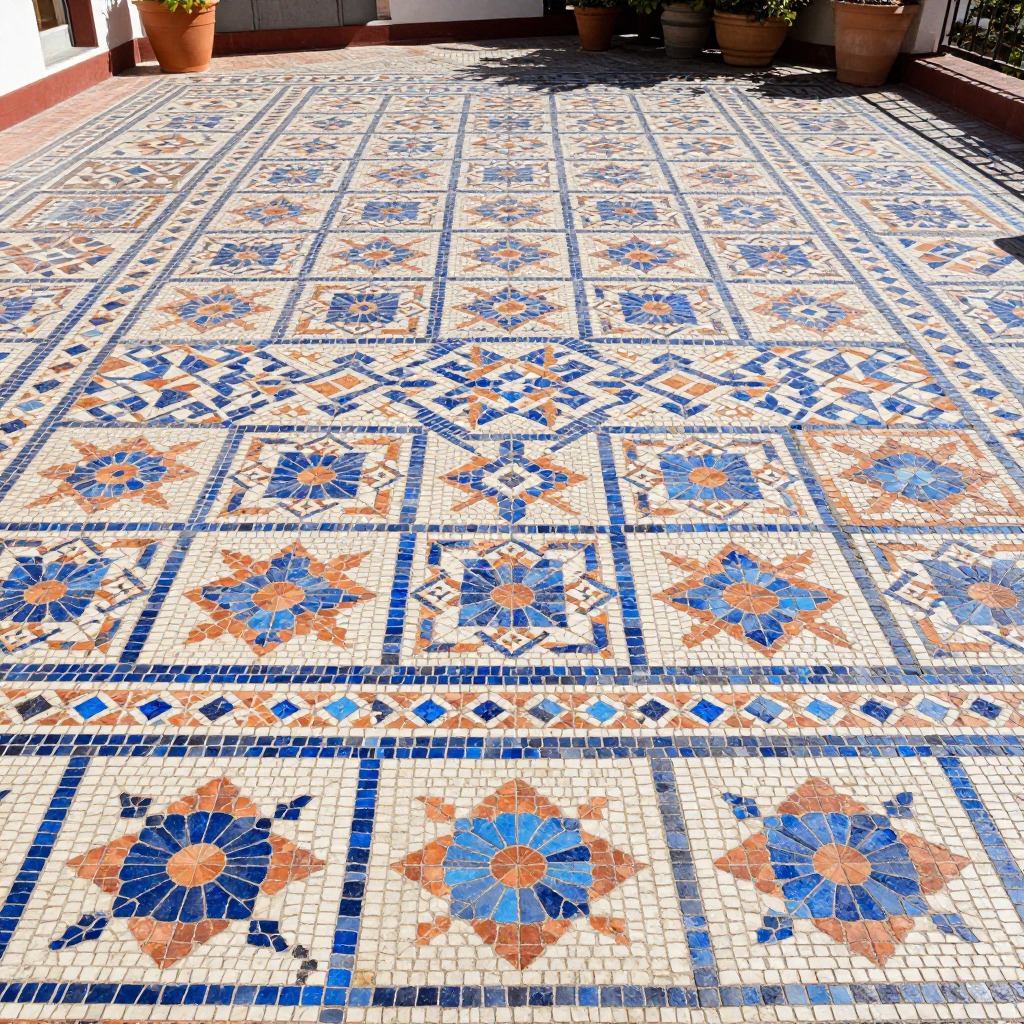
The choice of style determines the entire palette of materials and the character of the patterns. The Mediterranean style is characterized by the use of rich blue, terracotta, and golden hues. Large floral mosaics, images of citrus fruits, or marine motifs are appropriate here, evoking the atmosphere of villas on the Amalfi Coast. Such projects often employ the Byzantine technique with the addition of gold smalt, which shimmers brilliantly under direct sunlight, creating a sense of luxury, warmth, and historical continuity.
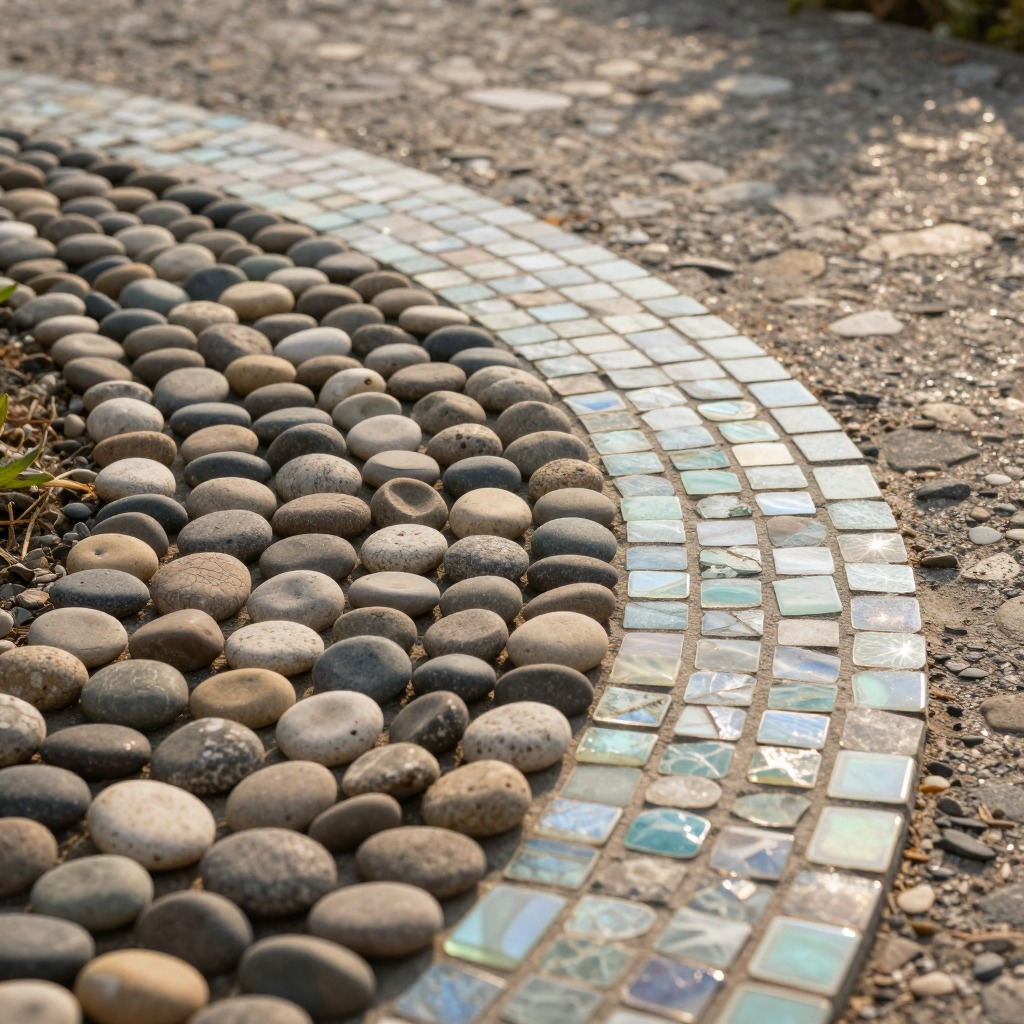
Japanese style, by contrast, is based on the philosophy of Wabi-sabi and strict minimalism. Mosaic in a Japanese garden should be as natural and unobtrusive as possible. Instead of bright colors, natural stones, river pebbles, and muted tones of gray, beige, and dark green are used. Abstract patterns imitating the flow of water or concentric circles in the sand (in the spirit of Karesansui rock gardens) are popular here. Mosaic inserts in such gardens are typically punctual and concise, emphasizing the silence, emptiness, and harmony of nature without drawing attention to themselves.
Art Nouveau brings fluidity and organicity to the landscape. It is characterized by smooth, curving lines reminiscent of plant stems, the curves of lilies, or ocean waves. Iridescent smalt and glass with a pearlescent effect are frequently used in Art Nouveau, allowing for the creation of shimmering panels on gazebo walls or in the design of garden gates. The combination of pastel tones with deep accents makes such objects resemble jewelry on a garden scale, turning functional structures into art objects.
Frost-Resistant Materials and Selecting Smalt for Outdoor Use
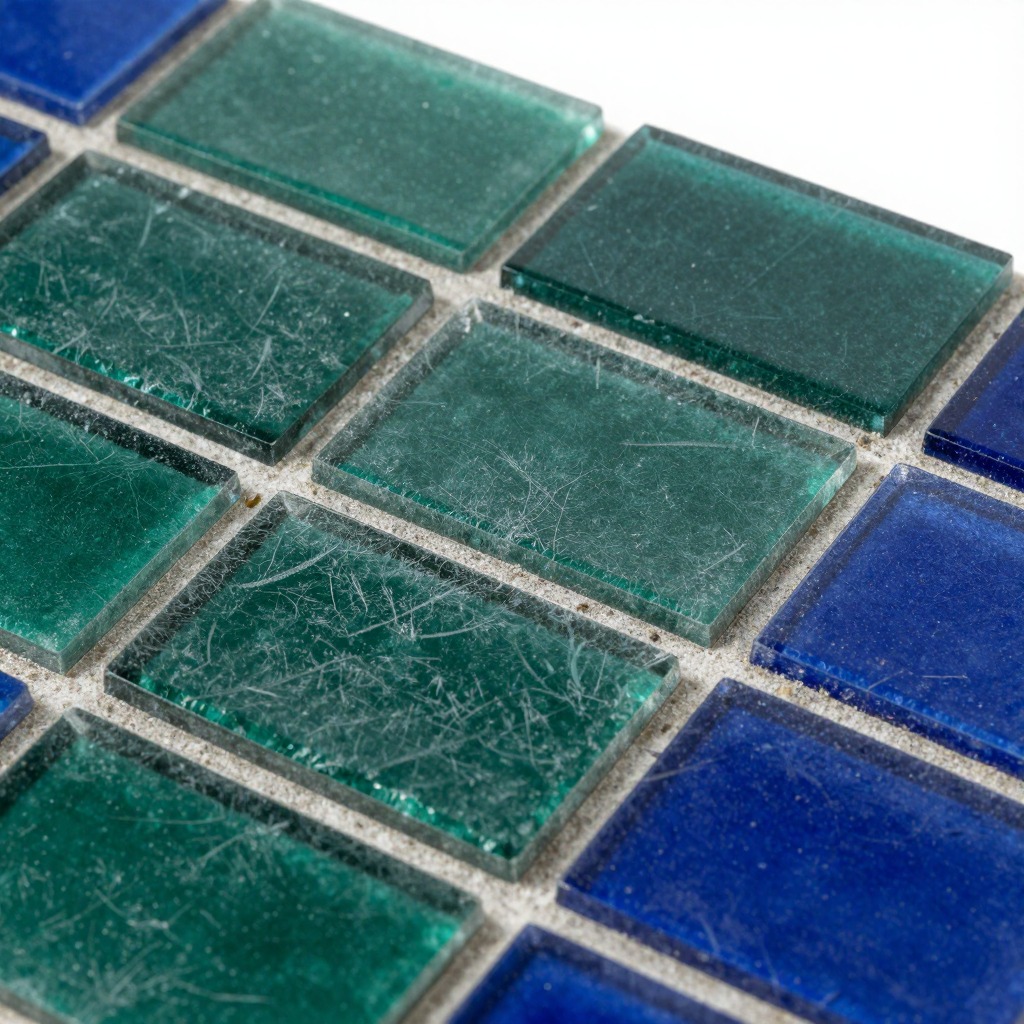
The primary challenge when using mosaic outdoors is sharp temperature fluctuations and constant exposure to moisture. For northern regions, it is critical to choose materials with a low water absorption coefficient (less than 0.5%) to avoid cracking when water freezes within the pores of the material. High-density porcelain stoneware and traditional glass smalt are ideal options. Due to its specific composition, smalt practically does not absorb moisture and retains its original color brightness for decades, without fading under the influence of aggressive ultraviolet rays.
For paths and steps subject to constant mechanical wear, the use of natural marble, granite, or basalt is recommended. These stones possess high density and resistance to abrasion. A vital aspect is the choice of grout. Ordinary cement mixtures deteriorate quickly in outdoor conditions due to freeze-thaw cycles. Professionals recommend using epoxy grouts, which create an absolutely waterproof barrier and prevent the appearance of mold, fungus, or salt efflorescence in the joints. The epoxy compound acts as an elastic adhesive, compensating for micro-shifts in the base during seasonal soil heaving.
When selecting materials for fountains and pools, preference should be given to specialized glass mosaics with a reinforced protective layer. These are not only aesthetically pleasing but also chemically inert, which is crucial when regularly using water cleaning and disinfection agents. Using materials with different textures—glossy and matte—allows for the creation of visual volume and depth even on small surfaces, creating an interesting play of light on the water’s surface.
Mosaic Installation Techniques for Outdoor Spaces
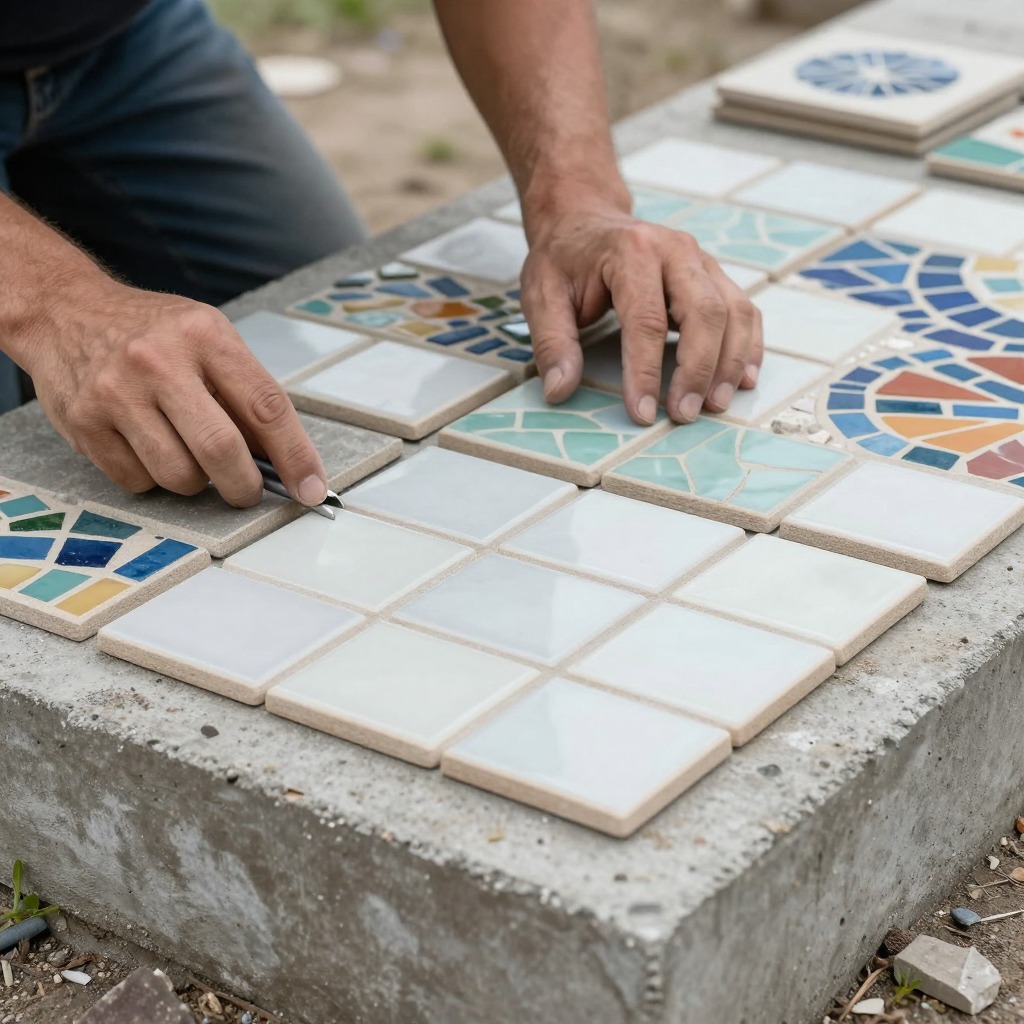
The process of installing mosaic outdoors differs significantly from interior work due to the need to account for soil movement. The first step is the preparation of a stable base. For paths, a multi-layered “sandwich” is created consisting of compacted sand (10-15 cm) and a concrete screed, with mandatory reinforcement using metal mesh. Without a high-quality foundation, the mosaic will inevitably crack during the first serious winter. A layer of professional waterproofing is applied to the concrete to prevent moisture from the soil from rising to the surface and destroying the adhesion between the tile and the base.
High-strength C2TE class adhesive, characterized by increased elasticity and frost resistance, is used during installation. There are two main methods: direct and indirect. The direct method is suitable for small areas and complex reliefs (for example, gazebo columns or the curves of planters). The indirect method involves assembling the panel on a mesh or paper base in a workshop, followed by its transfer to the site. This ensures perfect precision of the pattern, avoids errors in proportions, and significantly reduces the time spent on messy work directly on the plot.
A critically important element is the installation of expansion joints. Every 2-3 meters of the mosaic surface, a gap filled with an elastic sealant must be left. This allows the material to “breathe” during thermal expansion in summer and contraction in winter. After installation and grouting, the surface is thoroughly washed, and in the case of natural stone, treated with a hydrophobizing agent, which creates an invisible protective film that repels water, dirt, and road reagents.
Accent Zones: Fountains, Gazebos, and Garden Planters
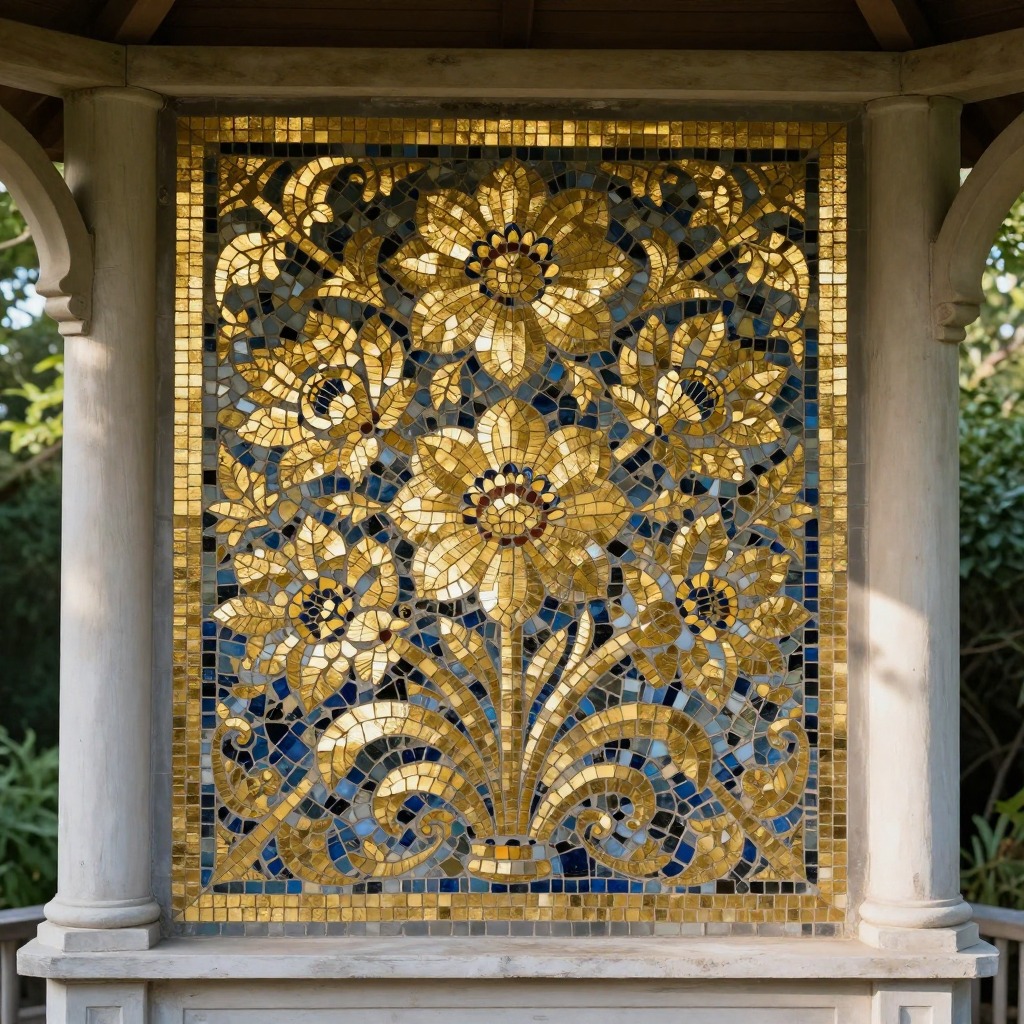
Mosaic allows for turning utilitarian objects into landscape focal points. Fountains clad in blue and turquoise smalt create the illusion of deep, crystal-clear water even in small basins. Byzantine-style fountains using gold inserts are particularly effective, creating a dazzling play of reflections as the water moves. For fountain basins, a double waterproofing method is recommended to completely eliminate leaks, which could lead to delamination.