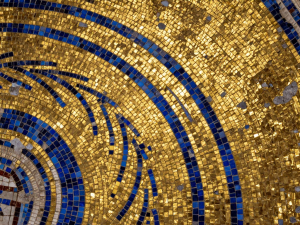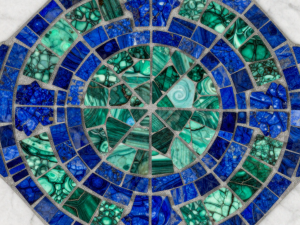
Mosaics in public spaces transform utilitarian concrete walls and gray plazas into full-fledged open-air art galleries. This art does more than just decorate architecture; it conveys meaning, captures historical eras, and shapes the emotional state of the thousands of people who pass by every day. From ancient forums to modern transport hubs, the monumental panel remains one of the most enduring ways to imprint a nation’s cultural code.
The History of Monumental Mosaics in Public Spaces
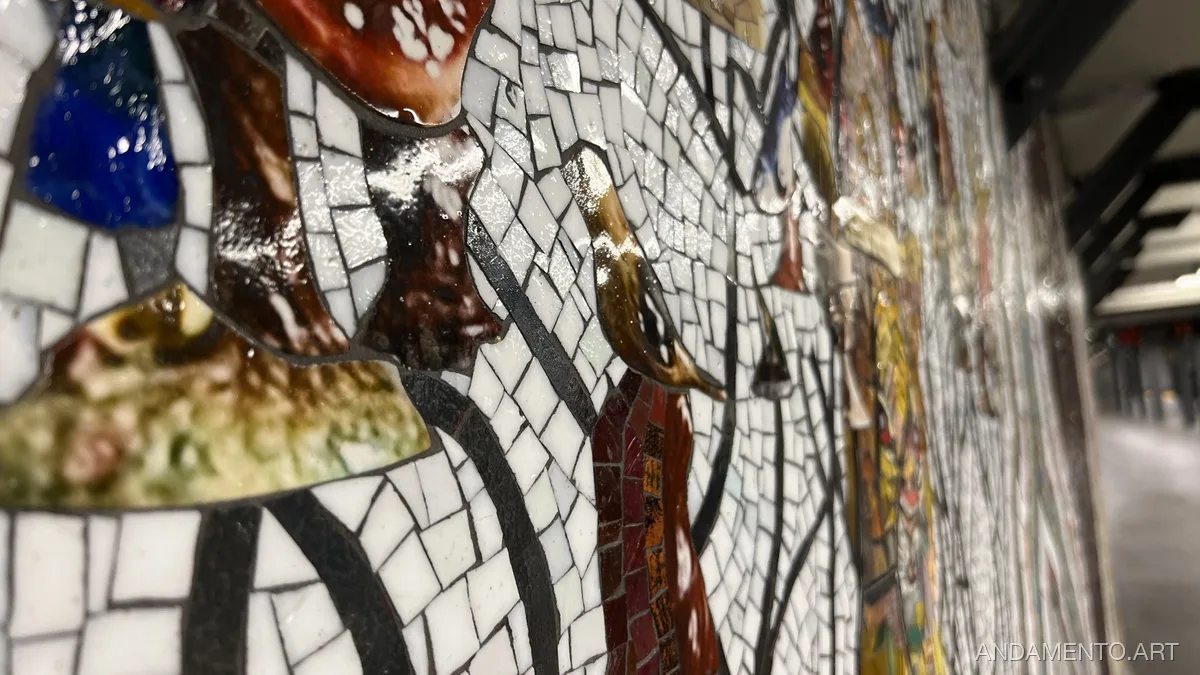
Mosaics in public spaces emerged as a symbol of status and power as early as Antiquity. In Ancient Rome, mosaic floors adorned not only private villas but also public baths, basilicas, and forums. In the 1st century BC, masters employed the opus tessellatum technique, where small cubes of stone and glass—tesserae—were arranged into complex geometric patterns or narrative scenes. For example, large-scale compositions preserved in Pompeii and Herculaneum served as visual landmarks within urban spaces.
With the rise of the Byzantine Empire, the focus shifted from floors to the walls and vaults of temples and palaces. It was during this period that monumental art reached its peak in the use of smalt—a specialized opaque colored glass. In Ravenna, in the basilicas of San Vitale and San Apollinare, 6th-century mosaics created an illusion of divine light, designed to overwhelm the viewer with their grandeur. In the Middle Ages and the Renaissance, public mosaics became tools for enlightenment: massive panels in cathedrals served as “books” for the illiterate population, conveying biblical stories through color and form.
The Moscow Metro: “Palaces for the People” and Smalt Masterpieces
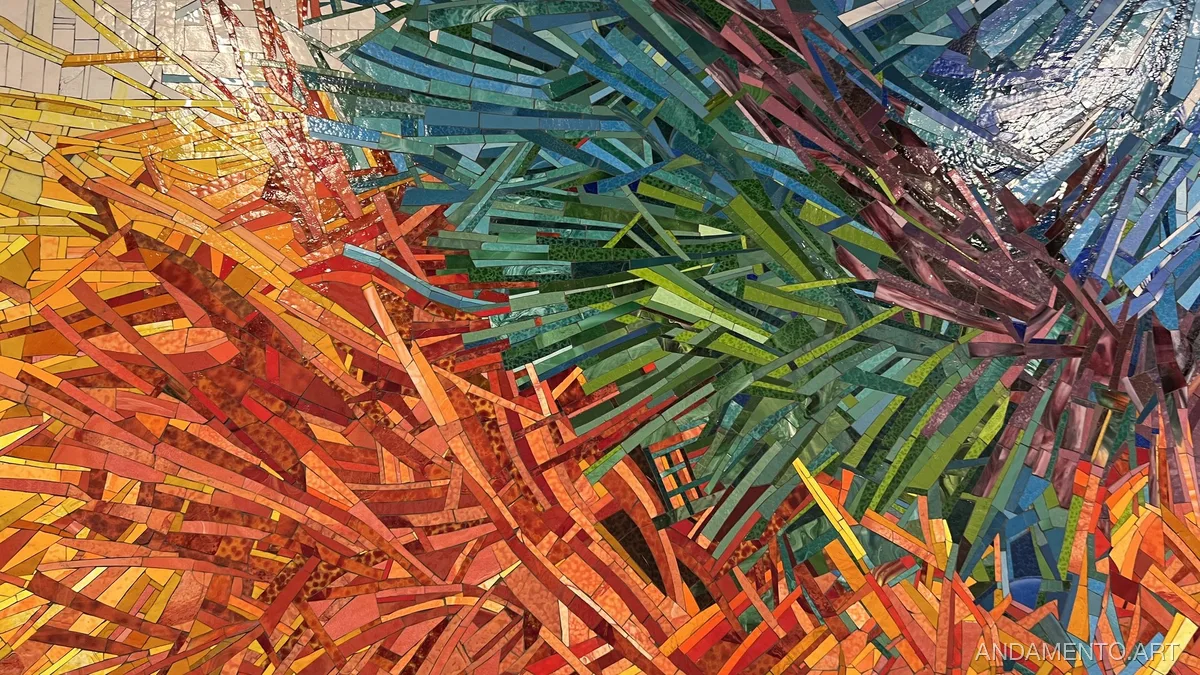
The Soviet period marked a true renaissance of monumental art, where mosaics in public spaces became a primary tool for the ideological shaping of cities. The Moscow Metro, opened in 1935, was conceived not merely as a transport system, but as a “palace for the people.” Here, mosaics were used to create an image of a bright future and to glorify the achievements of socialism. Particular attention should be paid to the Komsomolskaya station (Circle Line), where luxurious mosaic panels combined with crystal chandeliers create an atmosphere of solemnity.
Masters such as Alexander Deineka and other artists of the Stalinist era used smalt to create deep, saturated colors that have not faded for decades. In the post-war years, the style shifted toward a stark monumentalism: large-scale compositions appeared in railway stations and institute lobbies, dominated by geometric forms and industrial themes. The massive panel at Mayakovskaya station or the mosaics in the lobbies of the Stalinist skyscrapers demonstrate how tesserae were transformed into a powerful tool for visual propaganda and the aesthetic education of the masses, turning an ordinary metro trip into a stroll through a museum.
The European Experience: From Byzantine Grandeur to Catalan Modernism

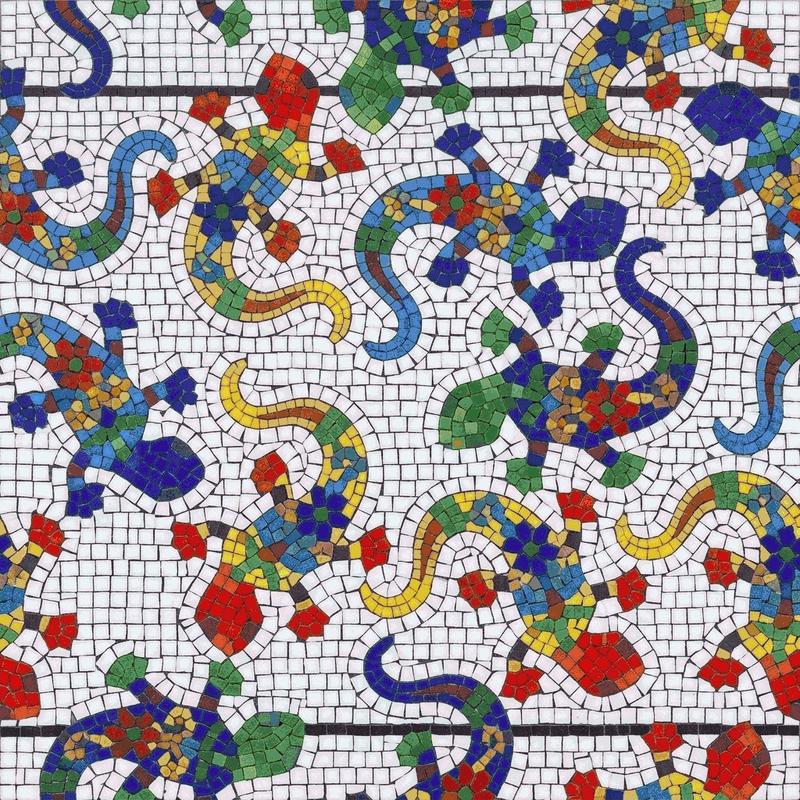
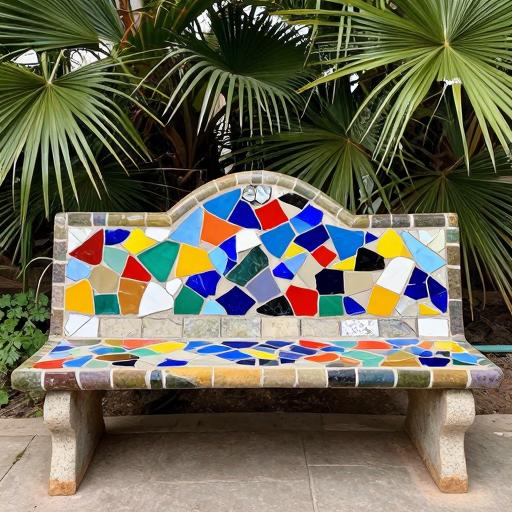
In Europe, the approach to designing public spaces evolved through the synthesis of architecture and decorative art. While mosaics in Italian public spaces long followed the canons of Classicism and Baroque, a true revolution occurred in Spain. Antoni Gaudí in Barcelona reimagined the concept of mosaic by creating the trencadís technique. Instead of neatly cut cubes, he used shards of ceramic tiles, pottery, and glass to create fluid, organic forms.
Park Güell and the facade of Casa Batlló became benchmarks for how mosaics can integrate into the urban environment, complementing natural lines rather than overpowering them. Meanwhile, in 20th-century Germany and France, public mosaics moved toward abstraction. After World War II, many squares and stations were decorated with panels that lacked a direct narrative, instead utilizing color and rhythm to create psychological comfort within industrial environments. Thus, the European tradition traveled a path from the strict hierarchy of Byzantine mosaics to the complete freedom of form found in modern street art.
The Technology of Large-Scale Panels and the Challenges of Restoration
Creating mosaics for public spaces requires a different engineering approach than working on a small-scale object. There are two primary methods: direct and indirect. In the direct method, tesserae are laid directly onto the base, allowing the master to see the play of light on the smalt in real time. However, for enormous panels in stations or the metro, the indirect method is more common: the mosaic is assembled in a studio on a paper or fabric backing (mesh), and then transferred to the wall in entire sections and secured with special adhesive.
The choice of material is critical: frost-resistant ceramics or natural stone are used for outdoor plazas, while smalt—prized for its unique light-reflecting properties—is used for metro interiors. The restoration of such objects is an incredibly complex process. The main challenge lies in finding identical smalt, as old factories may have closed and the chemical composition of the glass has changed over time. Restorers must not only fill in missing fragments of the panel but also clean away urban smog and soot without damaging the fragile surface of the tesserae. This requires the use of laser cleaning and special polymer grouts that mimic the original mortar.
Modern Art Objects and Digital Transformation
Today, mosaics in public spaces are experiencing a new wave of development thanks to technology. Modern artists are moving away from classical narratives, using mosaics to create interactive objects. In recent years, there has been a trend toward integrating LED lighting into the structure of the panels, allowing the mood of the object to change depending on the time of day. Monumental art has become more democratic: it is now often created in collaboration with city residents as part of street art projects, where recycled plastic or industrial glass is used instead of expensive smalt.
Artificial intelligence is having a significant impact. AI allows for the calculation of highly complex patterns and color transitions for giant panels that previously required months of manual drafting. Modern services make it possible to visualize how a mosaic will fit into the architectural context of a square or a station lobby before work even begins. This reduces errors in the layout of tesserae and allows for the creation of works that harmoniously combine digital precision with the manual skill of the master. Mosaics have ceased to be static monuments to the past, becoming instead a dynamic element of modern urbanism.
Mosaics in public spaces remain the most enduring way to leave a mark on a city’s history. They combine architectural power with jewelry-like precision, turning mundane routes into an aesthetic experience. If you wish to create your own unique mosaic project or transform a photograph into a digital masterpiece, explore the possibilities of the andamento.app service.