A mosaic on a building’s facade transforms a simple architectural form into a monumental work of art capable of withstanding decades of aggressive urban exposure. This is not merely decorative cladding, but a complex engineering process that blends the aesthetics of fine art with the rigorous requirements of industrial construction. In today’s urban environment, such panels become visual anchors that define the character of entire neighborhoods. Today, we will examine how these masterpieces are created, which materials allow them to retain their brilliance after half a century, and the current costs of implementing such a project, taking into account all climatic risks.
History and Evolution: The Emergence of Facade Mosaics
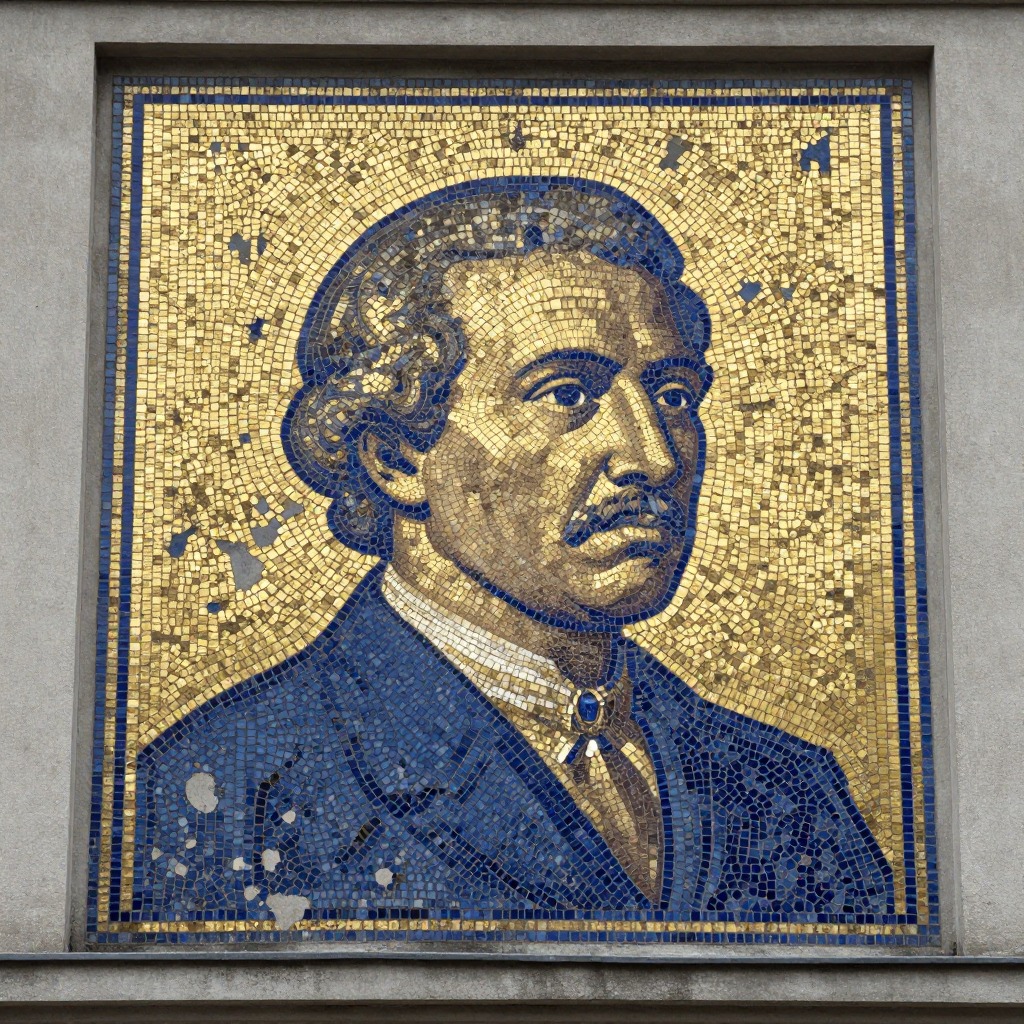
Пример монументальной мозаики в стиле советского монументализма на фасаде
The art of decorating exteriors with small fragments of stone and glass dates back to antiquity, but facade mosaics truly flourished in Byzantium and later in Europe. In Spain, Antoni Gaudí sparked an architectural revolution by introducing the Trencadís technique—the use of broken ceramics and glass. This method allowed him to clad the complex curvilinear surfaces of Park Güell, creating organic forms that blended seamlessly with the natural landscape. In Russia, however, the mosaic facade became more than just decoration; it became a symbol of an entire era—Soviet Monumentalism.
From the 1950s to the 1980s, mosaics were the primary tool for state propaganda and the aesthetic education of the masses. This period saw the emergence of a unique “Soviet Mosaic” style, characterized by large-scale forms, the use of vibrant smalt, and themes of labor achievements, space exploration, and the ideal of peace. During this time, a mosaic on a building’s facade served as an “open book” that any passerby could read. Soviet masters, such as Zurab Tsereteli in his early years or the creators of the grand panels at VDNKh, used mosaics to create massive narrative canvases designed to inspire awe and pride.
Unlike European decorativism, the Soviet approach was maximally monumental: vast surfaces of residential and administrative buildings were transformed into ideological paintings. The Opus Tessellatum technique (laying square or rectangular elements) allowed for the creation of clear images that were legible from a great distance. Such works did not fade under the scorching sun nor crumble due to sharp temperature fluctuations, which was critical for the harsh climate of the USSR, where buildings were subjected to extreme stresses.
Materials for Facade Mosaics and Frost Resistance Requirements
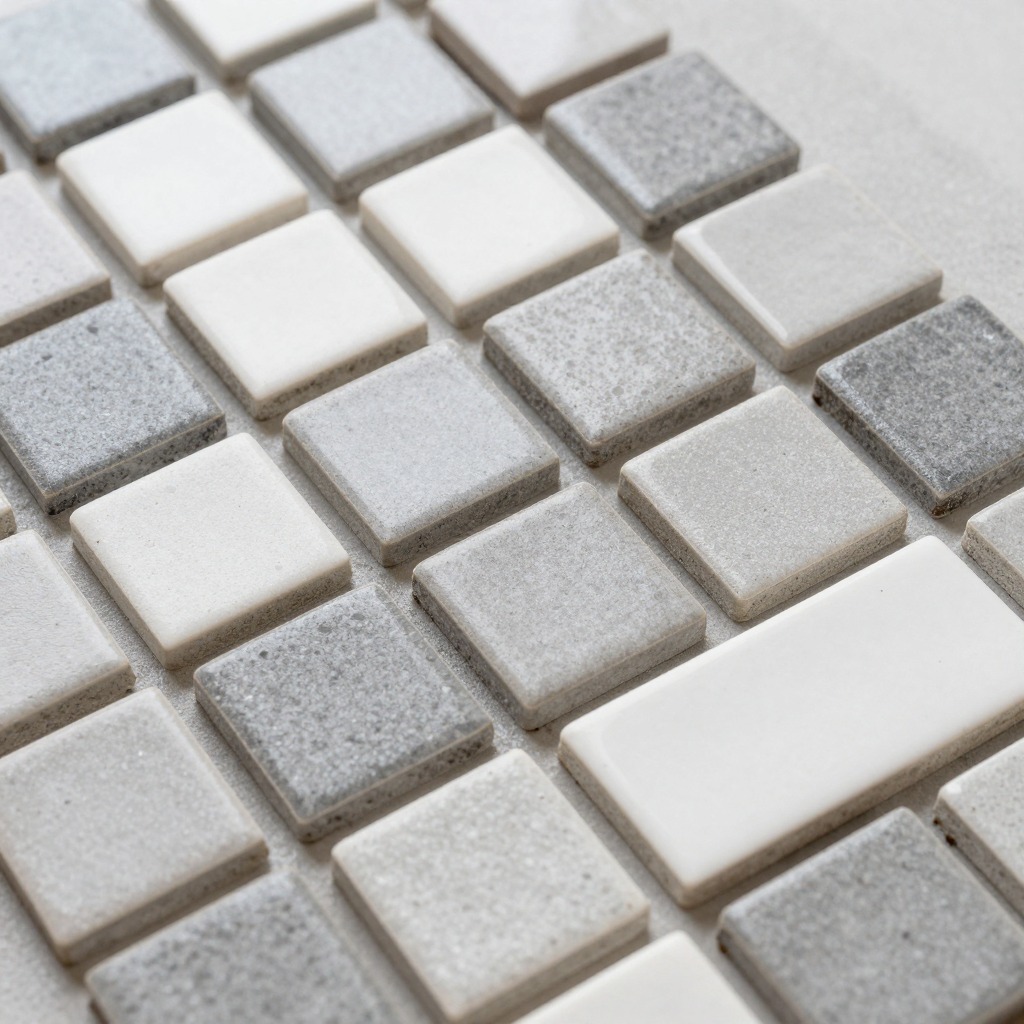
Керамическая мозаика с высокой морозостойкостью для российского климата
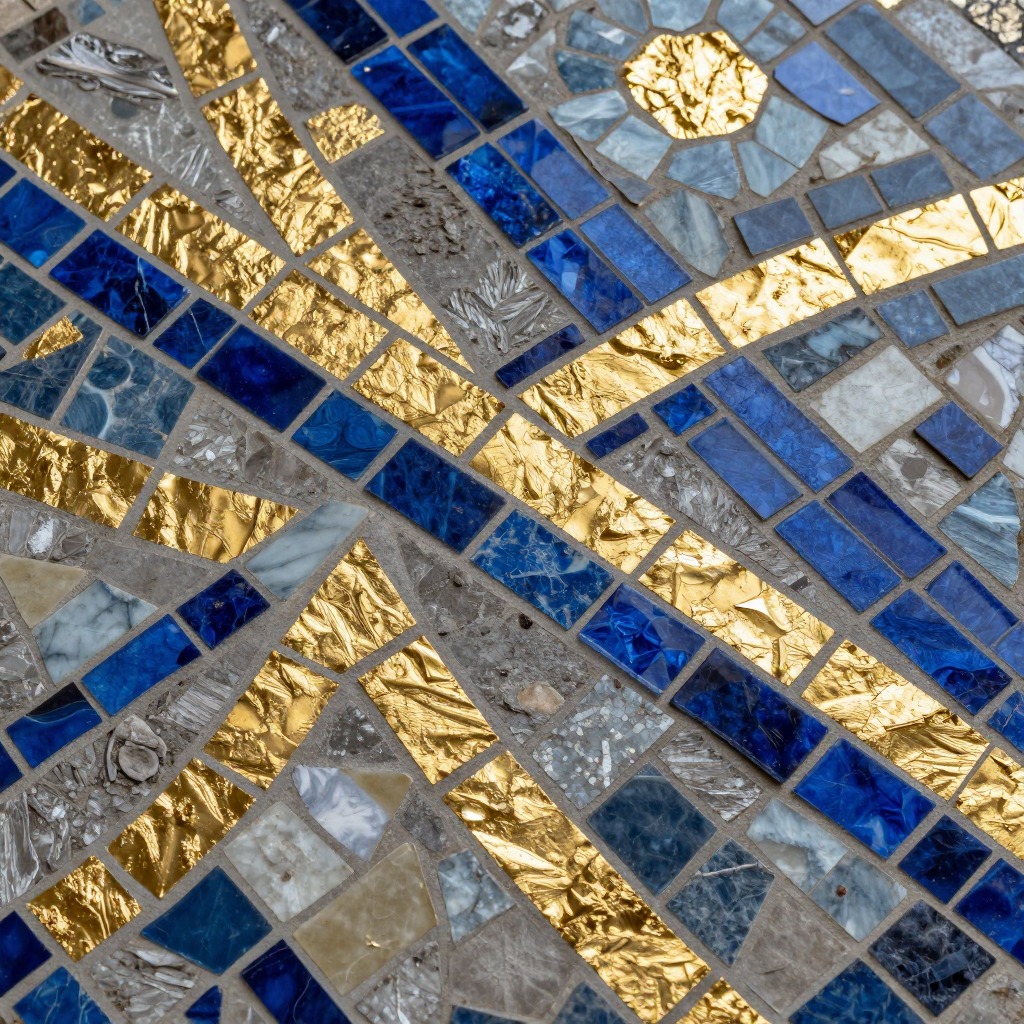
The choice of material for exterior cladding directly determines the lifespan of the entire architectural object. In the Russian climate, where temperature swings can reach 70 degrees (from -30°C in winter to +40°C in summer), standard interior tiles are completely unsuitable. The primary material remains smalt—a specialized opaque glass infused with metal oxides and fired at very high temperatures. Smalt has virtually zero water absorption, making it entirely frost-resistant: water does not penetrate the pores of the material, meaning there is no internal cracking or delamination during freezing.
In addition to smalt, specialized ceramic mosaics and glass fusing are actively used in modern construction. For facade work, only ceramics with an extremely low water absorption coefficient (less than 0.5%) are used to guarantee the durability of the coating. The grouting compound also plays a vital role. Modern masters have almost entirely moved away from cement-based grouts in favor of high-strength epoxy compositions. Epoxy resin creates a hermetic barrier that prevents moisture from reaching the wall base and prevents the appearance of efflorescence—unsightly white streaks on the surface.
Furthermore, special high-elasticity adhesives are used during design. These compounds can compensate for the thermal expansion of the building, preventing the mosaic canvas from peeling away from the concrete or brick base. Without such elastic binders, a mosaic on a building’s facade may begin to “pop off” after just a few seasons due to the natural movements of the building’s structure.
Installation Technology for Mosaics in Open Spaces
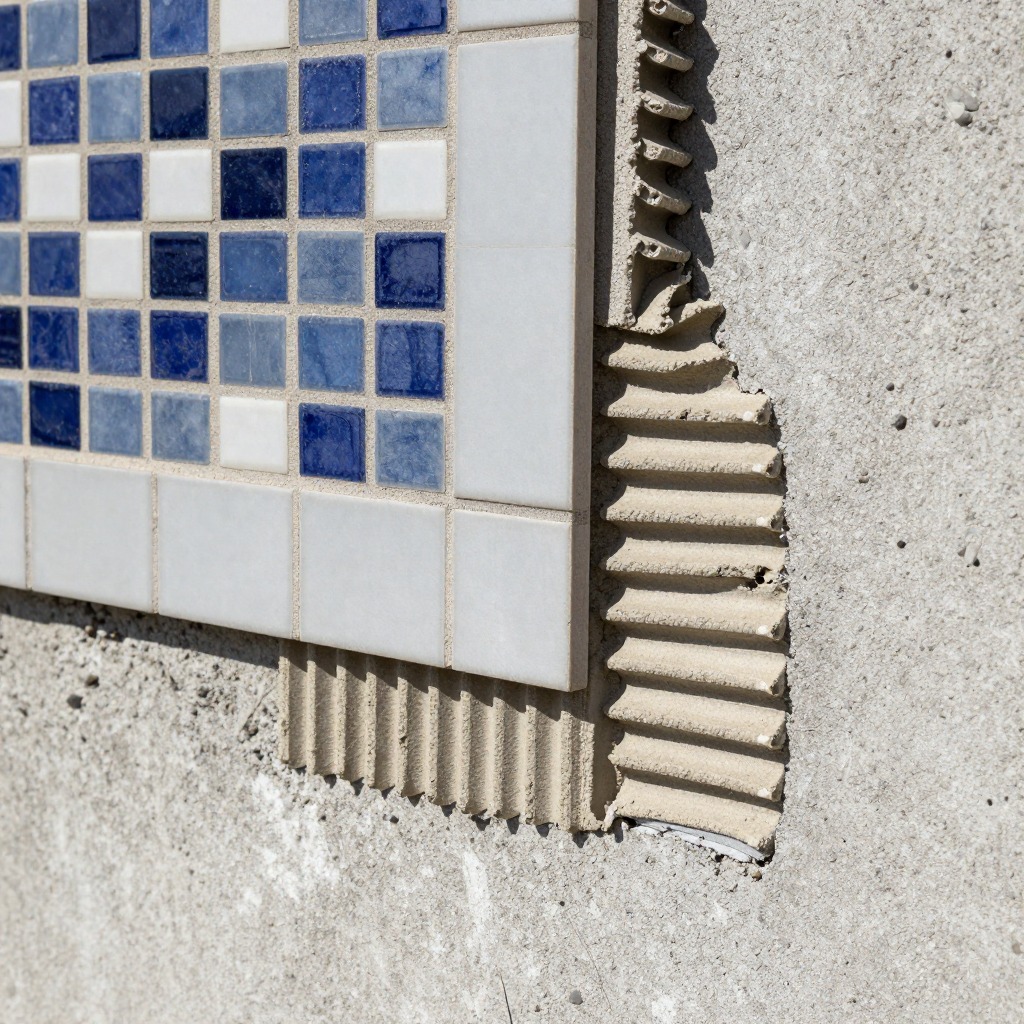
Детальный вид технологии крепления мозаики на открытых пространствах
The installation of a mosaic on a building’s facade requires strict adherence to the technological cycle, as any error in surface preparation leads to the collapse of fragments. There are two main methods: direct and indirect. The direct method involves gluing each tessera (element) directly onto the wall. This is an extremely labor-intensive process, used today primarily for small accent areas or when restoring lost fragments of old panels.
The indirect method is considered the standard for large areas. The image is assembled in a studio on a special base (mesh or paper) according to a pre-prepared full-scale sketch known as a “cartoon.” After this, the finished modules are transferred to the facade. This ensures perfect accuracy of the drawing, avoids compositional errors, and significantly speeds up the installation process at height. In the studio, the master can meticulously refine every color transition, which would be impossible while working on scaffolding.
Particular attention is paid to surface preparation. First, a powerful waterproofing layer and an adhesive primer are applied to the concrete or brick. Then, a reinforcing mesh is installed to prevent cracks during building settlement. A crucial element is the use of expansion joints. Since the mosaic and the wall have different coefficients of thermal expansion, technological gaps filled with elastic sealant are created every 3-5 meters. This allows the structure to “breathe,” eliminating the risk of the entire panel cracking during sudden temperature drops or micro-shifts in the foundation.
Iconic Examples of Facade Mosaics in Russia
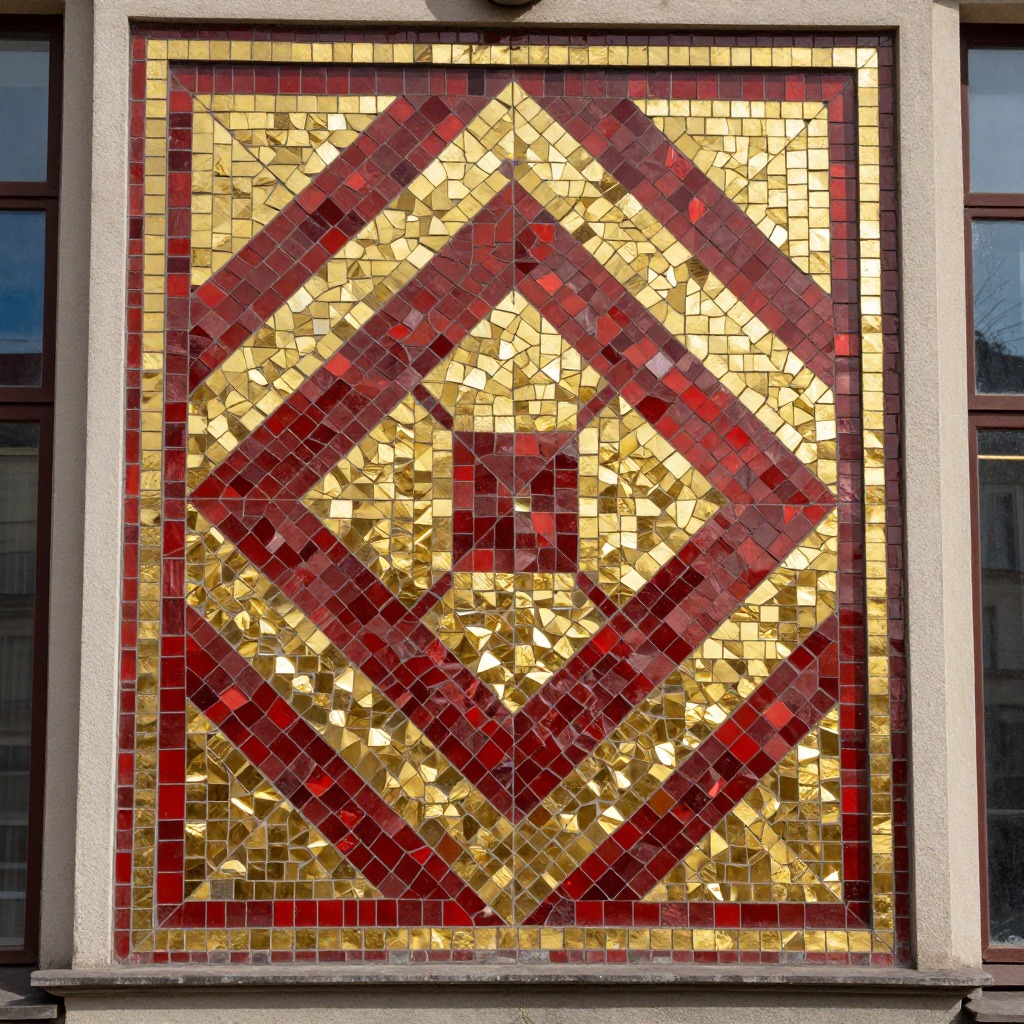
Яркий пример мозаичного оформления фасада здания в России
Russia possesses a unique heritage of mosaic art, where facade mosaics often serve as the primary architectural dominant of an entire site. One of the most striking and large-scale examples is VDNKh in Moscow. Here, masterpieces of monumental art are presented, where smalt is combined with natural stone to create multi-dimensional compositions. The mosaic panels of the pavilions not only decorate the space but also demonstrate the technical perfection of the Soviet school: perfect fitting of elements and the use of gold smalt to create an internal glow effect that changes depending on the angle of the sun’s rays.
Attention should also be paid to the Stalinist Empire style—residential buildings in the centers of Moscow and St. Petersburg, where mosaics were used to decorate entrance groups, portals, and inter-floor transitions. These projects often employed a technique close to the Byzantine style, emphasizing strict ornamentation and symmetry. In the modern period, examples of neo-modernism can be found, where mosaics are used more selectively, in the form of abstract geometric shapes or digital patterns integrated into glass facades.
The restoration of these objects has become a distinct art form today. It requires not only high craftsmanship but also chemical analysis to find the original smalt recipes from 50 years ago. This is necessary to preserve the authentic color balance, as modern analogues may differ in saturation and reflectivity, which could ruin the overall harmony of a historical facade.
Cost per Square Meter and Pricing for Facade Mosaics
Преммиум материалы из смальты и золотой смальты для мозаики
The cost of implementing a mosaic facade is composed of material costs, the complexity of the artistic sketch, and installation labor. On average, the cost per square meter varies from 15,000 to 150,000 rubles and higher. The lower price threshold is typical for simple ceramic mosaics using standard factory meshes and simple geometric patterns. In such cases, the bulk of the cost is the surface preparation and the gluing of ready-made modules.
The upper price segment applies to works made from premium smalt or natural stone using custom designs. In such projects, material costs can account for up to 40% of the total budget. A key pricing factor is the “density” of the drawing: the more fine details and smooth color transitions (gradients), the more time the master requires to select and lay each tessera. Working with gold smalt, which uses real gold leaf sealed in glass, significantly increases the estimate.
Costs also increase when scaffolding is required at great heights and when specialized epoxy compounds for extreme temperatures are used. An individual project involving a detailed sketch developed by a professional mosaic artist adds a fixed sum for the design project. It is important to understand that a mosaic on a building’s facade is an investment in longevity: when installed correctly, it lasts for decades without the need for updates, unlike facade paints or plasters.
Modern Approach and AI Generation of Facade Mosaics
Today, the industry is undergoing a massive transformation: digital technologies and artificial intelligence are replacing hand-drawn sketches. Modern facade mosaics are increasingly designed using algorithms that allow for the calculation of the ideal Andamento—the direction and flow of the tesserae layout lines. AI helps optimize material consumption by creating precise layout maps, which minimizes the waste of expensive smalt. This enables the creation of highly complex, photorealistic images that were previously only possible using Classical AI or Opus Tessellatum techniques.