Stained glass for mosaics transforms ordinary light into a living painting, creating a sense of depth and volume unattainable with traditional paints. This technique has evolved from the monumental windows of Chartres Cathedral to intimate interior panels and modern digital art. Today, the combination of transparency, color, and texture allows for the creation of works that literally breathe with light, shifting their mood depending on the time of day.
History and Evolution: Stained Glass for Mosaics in Architecture
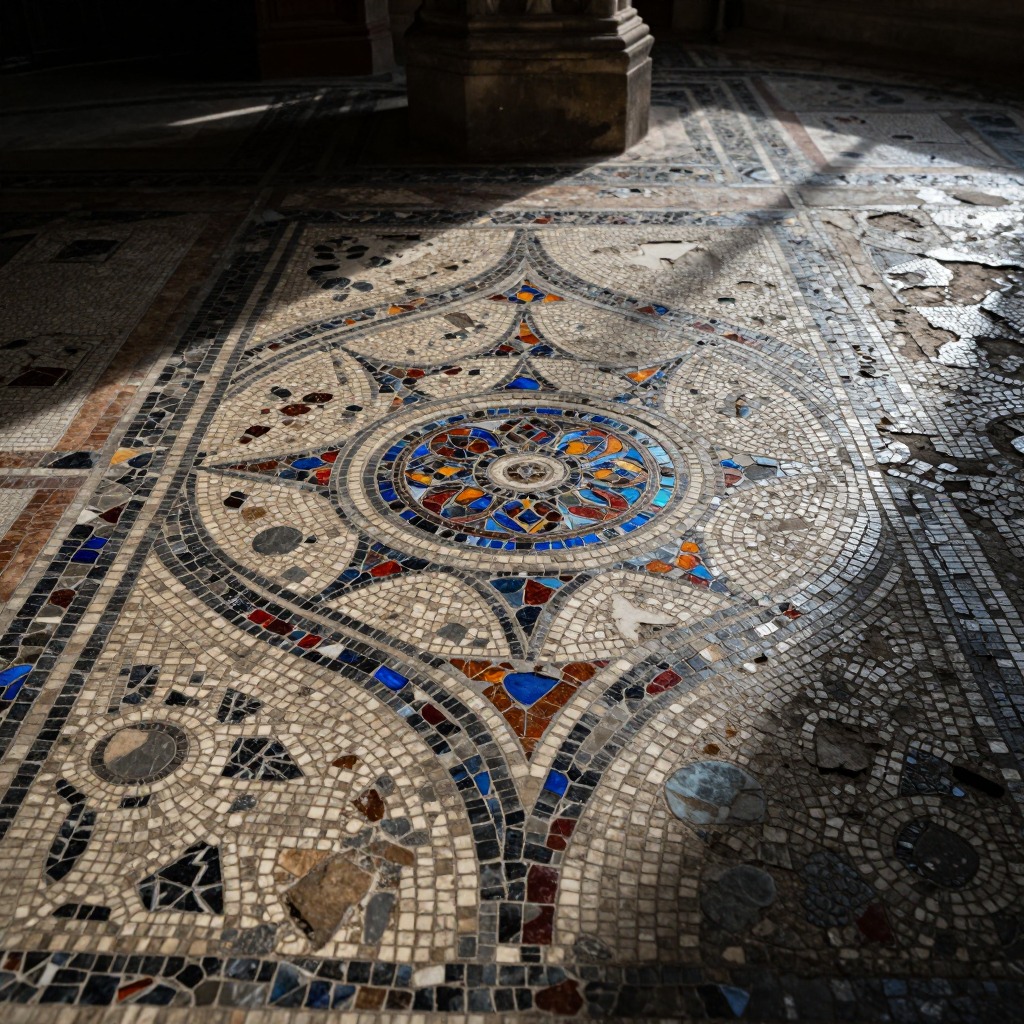
The use of colored glass in mosaic and window compositions reached its zenith during the Gothic era, when light was perceived as a symbol of divine presence. In the 12th century, Abbot Suger introduced the concept of “Lux Nova” (New Light) at the Basilica of Saint-Denis in France, where massive stained-glass windows replaced solid walls. At that time, stained glass for mosaics and windows was created by adding metal oxides to the molten mass: cobalt produced a deep blue, copper created red, and manganese yielded purple. Masters of that era lacked modern tools, so each fragment was cut by hand using a red-hot iron rod or a diamond cutter.
By the Renaissance, the technique became more sophisticated: artists began using enamels and grisaille to paint faces and fine details, turning stained glass into full-fledged paintings. The 19th century saw a revival of the art form, as glass ceased to be an exclusively ecclesiastical attribute and moved into private mansions and public buildings. This paved the way for experiments with texture, density, and transparency, eventually leading to the creation of the new types of decorative glass used in mosaics today.
Stained Glass vs. Smalti: What is the Fundamental Difference?
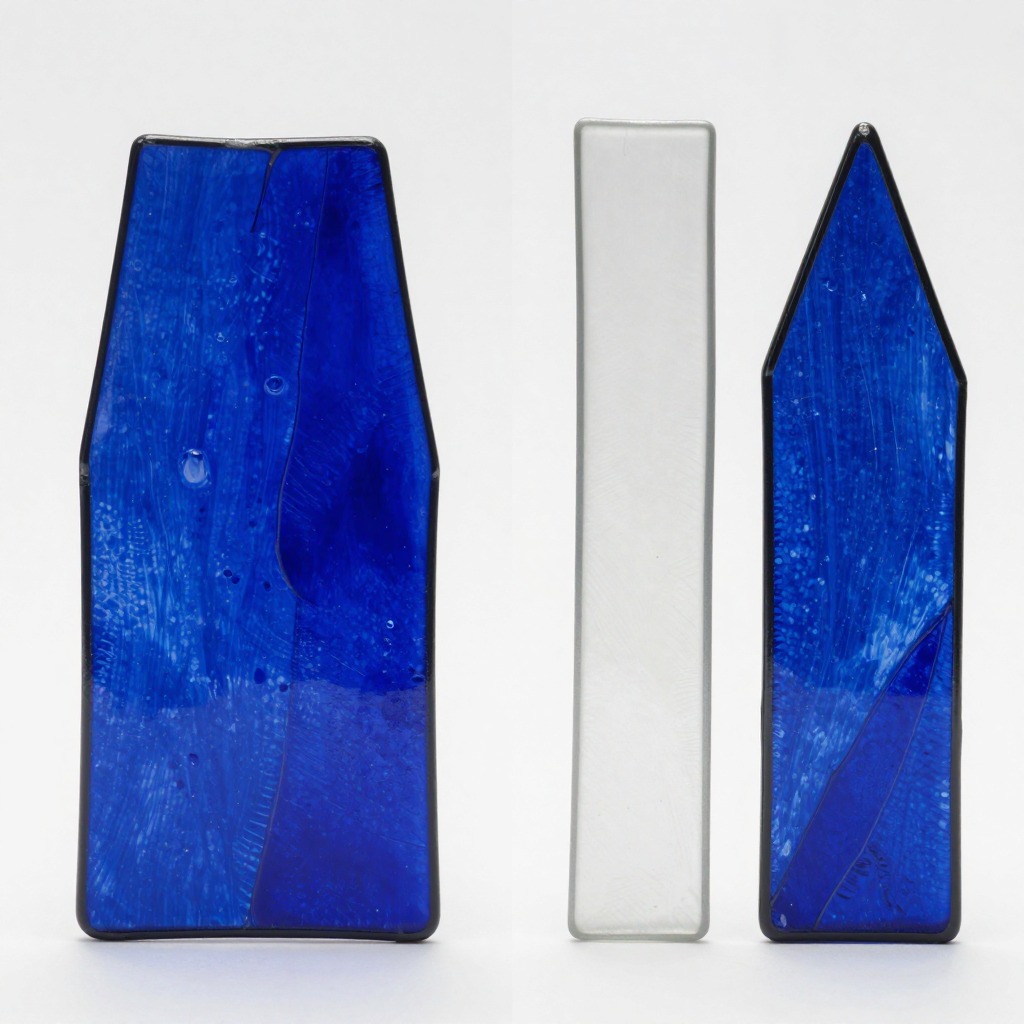
Many novice artists confuse stained glass for mosaics with smalti, yet these are fundamentally different materials in terms of chemical composition and optical properties. Smalti is an opaque, dense glass made from crushed glass mixed with metal oxides and fired at extremely high temperatures. It possesses a rich, deep color and a characteristic grainy structure, making it ideal for monumental mosaics that must look consistent under any lighting conditions.
Stained glass, by contrast, is characterized by varying degrees of transparency: from fully transparent (cathedral) to semi-matte (opalescent). The primary difference lies in how they interact with light. While smalti reflects light from its surface, stained glass allows light to pass through it, refracting and scattering it. This makes stained glass indispensable for creating light panels, lamps, or window inserts. Smalti provides monumentality and stability, whereas stained glass offers dynamics and ethereality, allowing for lighter, more airy compositions in the style of Opus Tessellatum or modern AI interpretations.
The Tiffany Technique and the Influence of Iridescent Glass
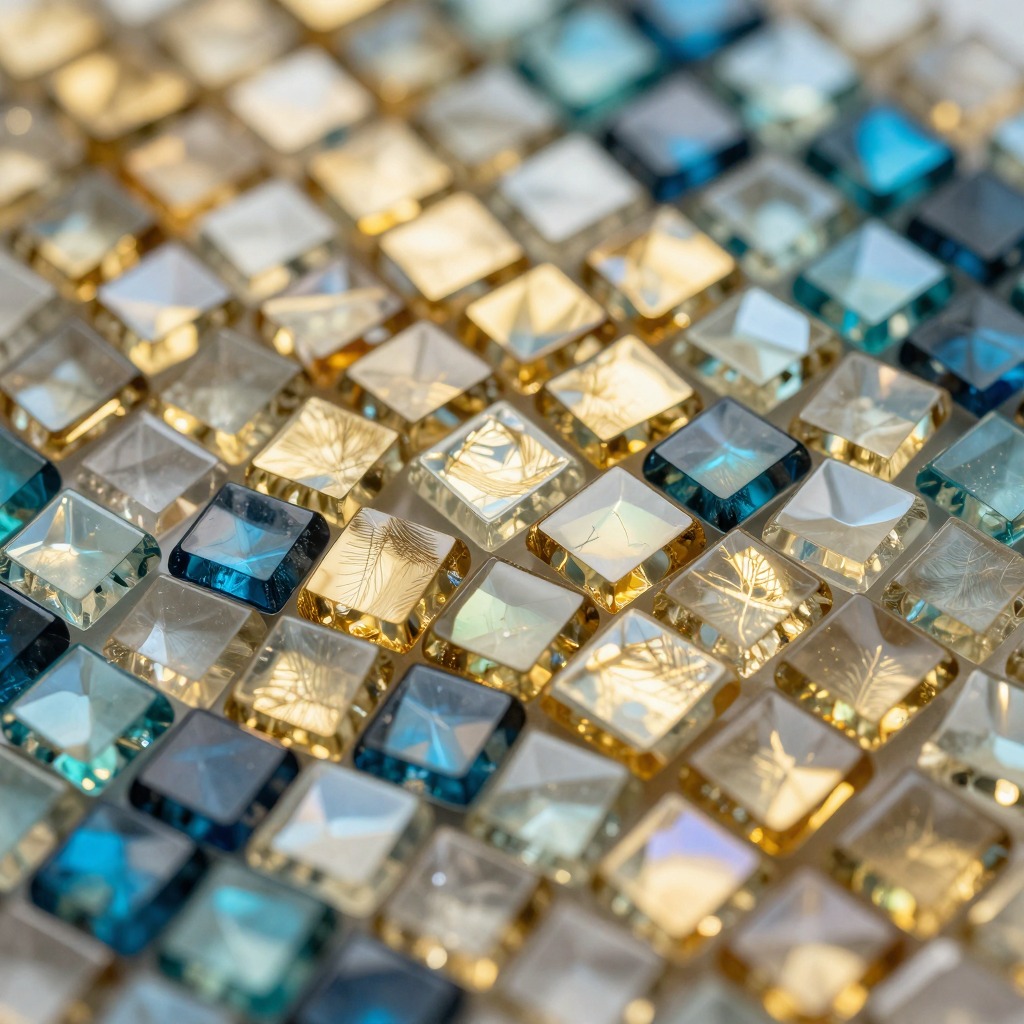
Louis Comfort Tiffany revolutionized the work with colored glass in the late 19th century. He moved away from traditional lead cames, which limited the shape of the elements, and developed the copper foil method. The essence of this technique was that each piece of glass was wrapped in a thin copper ribbon, which was then soldered with tin. This allowed for the creation of incredibly detailed, organic forms—flowers, leaves, and birds—effectively turning stained glass into a three-dimensional glass mosaic.
A particular contribution by Tiffany was the creation of iridescent glass (Favrile). Through a special process of treating the surface with metal vapors, the glass acquired a rainbow-like, pearlescent sheen. Such glass changes color depending on the viewing angle, adding a mystical volume to the work. For the modern mosaic artist, using iridescent elements allows for the imitation of gemstones or the surface of water, creating accents that draw the eye and bring the composition to life. The Tiffany technique proved that glass could be more than just a flat plane, but a plastic material for sculptural forms.
Tooling and Cutting Techniques: From Theory to Practice
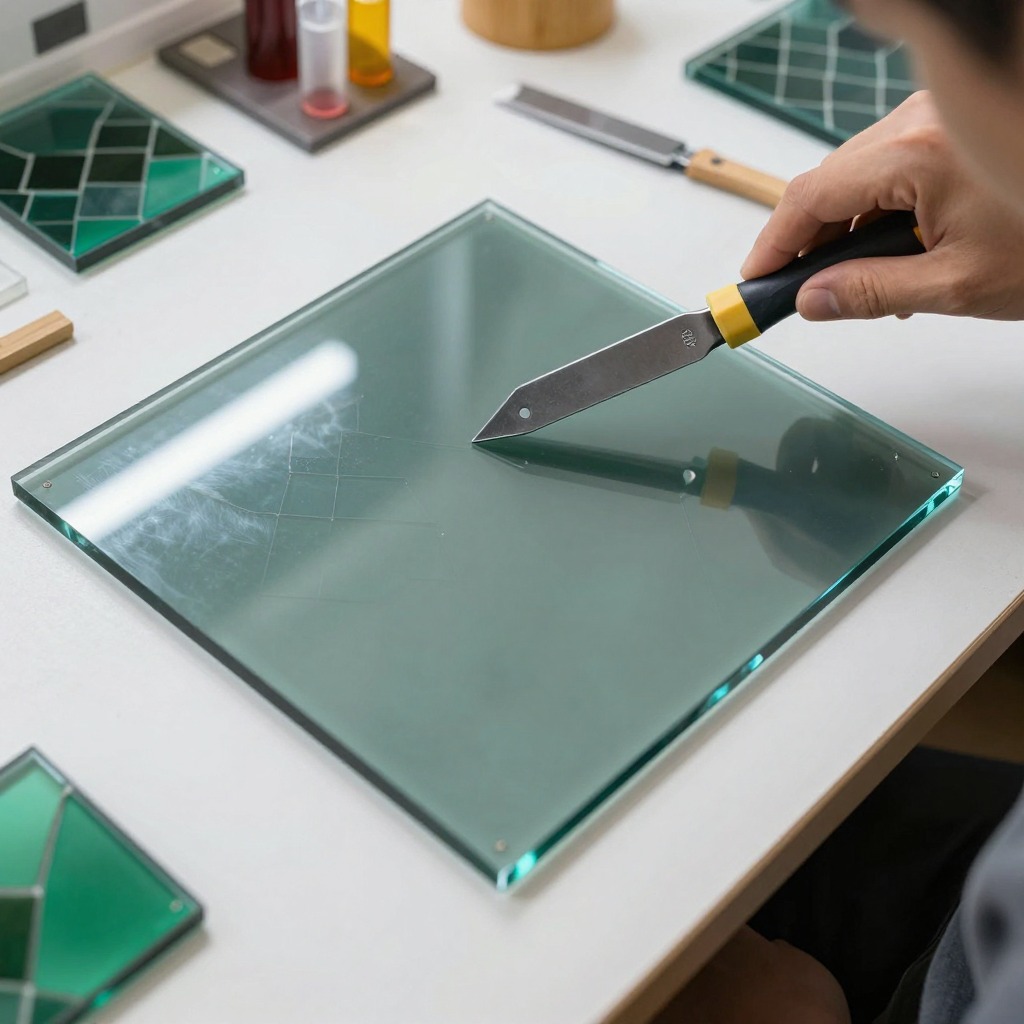
Working with stained glass in mosaics requires a specific set of tools, as ordinary scissors or pliers can lead to unpredictable chipping. The primary tool is a glass cutter with a tungsten carbide roller or a diamond tip. The process begins with creating a “score”—a thin incision on the glass surface. It is important to remember that the glass cutter does not actually cut the material, but creates a point of tension along which the glass is then carefully broken.
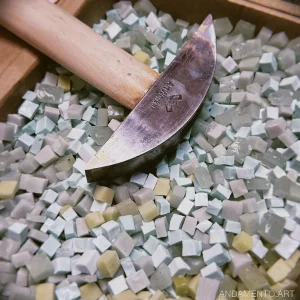
To separate fragments precisely, running pliers are used; they apply even pressure to the edges of the score, preventing cracks in unwanted areas. If an edge needs to be trimmed or a small piece removed, grozing pliers are used. For creating fine mosaics requiring fragments of only a few millimeters, special mosaic nippers with flat blades are employed. Safety comes first: the use of protective goggles and gloves is mandatory, as microscopic glass shards are extremely dangerous. Proper cutting technique minimizes waste and creates perfectly fitted elements, which is critical for the tight layout found in Florentine or Byzantine styles.
From Trencadís to Modern Panels: Project Ideas
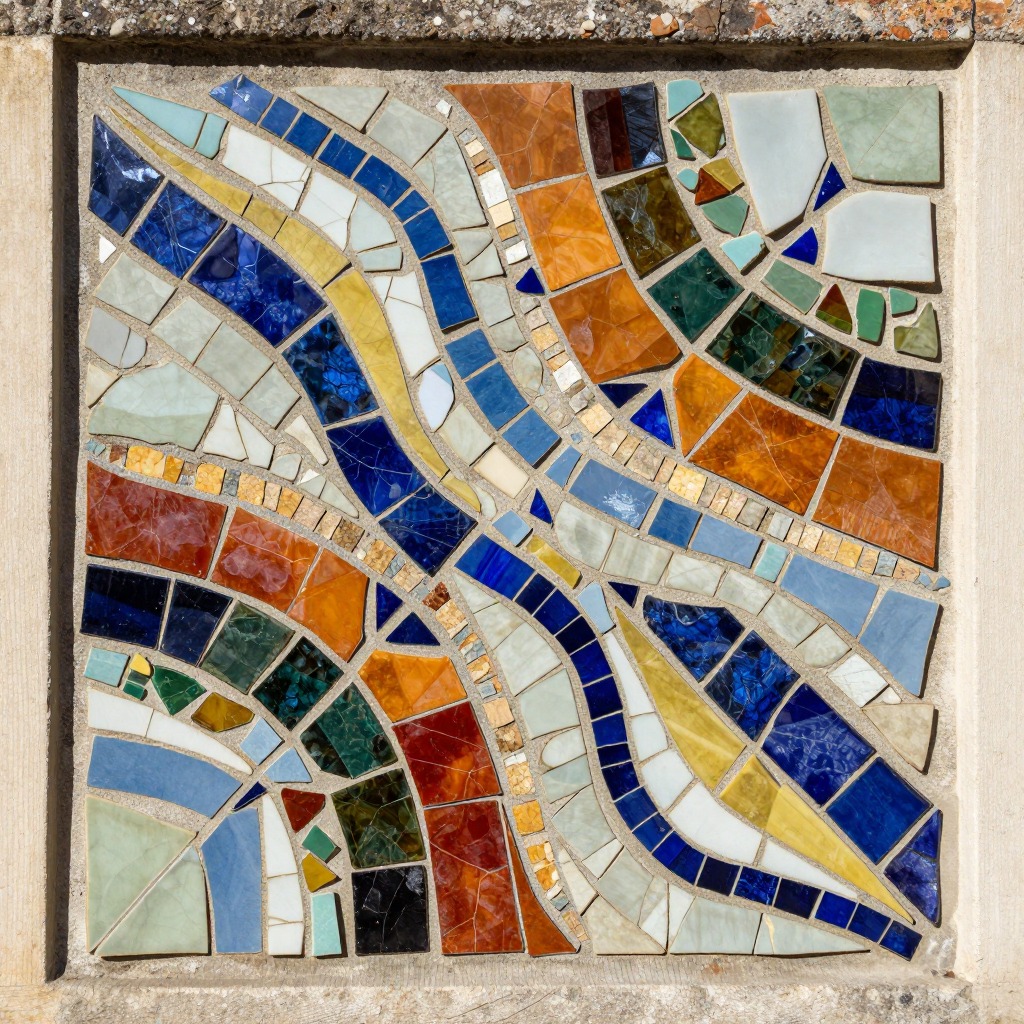
One of the most inspiring directions for using stained glass in mosaics is the Trencadís style, popularized by Antoni Gaudí in Park Güell in Barcelona. This technique involves using broken ceramics and shards of colored glass to clad curved surfaces. Instead of striving for perfect geometry, the artist uses random shapes to create a vibrant, chaotic, yet harmonious pattern. This is an excellent option for beginners, as the lack of strict constraints allows for experimentation with color and texture.
For those who wish to create something more structured, projects with a light background are recommended. For example, creating a mosaic lampshade or a table lamp where stained glass is combined with transparent inserts. Another interesting option is the “sun-catcher”—a small hanging panel attached to a window. Here, one can apply Classical AI techniques to create complex geometric patterns that play in the sun. The main advice for beginners is to start with small forms (coasters, jewelry boxes) and gradually move toward large-scale wall compositions where complex color transitions can be realized.
How to Choose Quality Glass: Buying Tips
When choosing stained glass for mosaics, it is important to pay attention not only to the color but also to the type of glass. Opalescent glass contains additives that make it milky-white or translucent; it is ideal for creating soft transitions and matte surfaces. Cathedral glass is fully transparent and possesses high brightness, making it the best choice for objects that will be backlit. If you need unusual effects, look for “textured” glass that imitates hammered metal, water, or stripes.
Related works in the gallery:
When purchasing sheets or kits, check the glass for internal stresses and large air bubbles, which can lead to spontaneous cracking during cutting. The optimal thickness for mosaics is 3-4 mm; glass that is too thin will be fragile, while glass that is too thick will complicate the cutting process and increase the weight of the piece. It is also recommended to buy glass from different series of the same color to create a natural variation of shades in the work, avoiding a “plastic” effect of uniformity. Checking the glass against the light in the store will help you understand exactly how the material will interact with the light source in your final project.
Creating glass mosaics is a meditative process that combines mathematical precision with pure inspiration. If you want to see how your ideas would look in different techniques, from Byzantine to modern, try visualizing your projects in andamento.app.