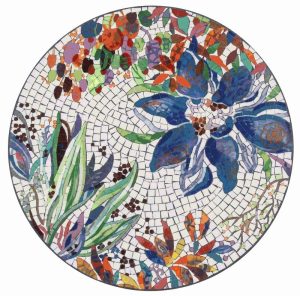
Mosaic as a hobby allows you to transform scattered shards of glass, ceramics, or natural stone into a complete work of art. This activity combines the meditative process of laying out elements with the architectural precision of assembling a composition. Today, thanks to the accessibility of materials and the emergence of AI design tools, the barrier to entry for this craft has become minimal, even for those who have never held the tools before.
Why Mosaic as a Hobby is Gaining Popularity Today
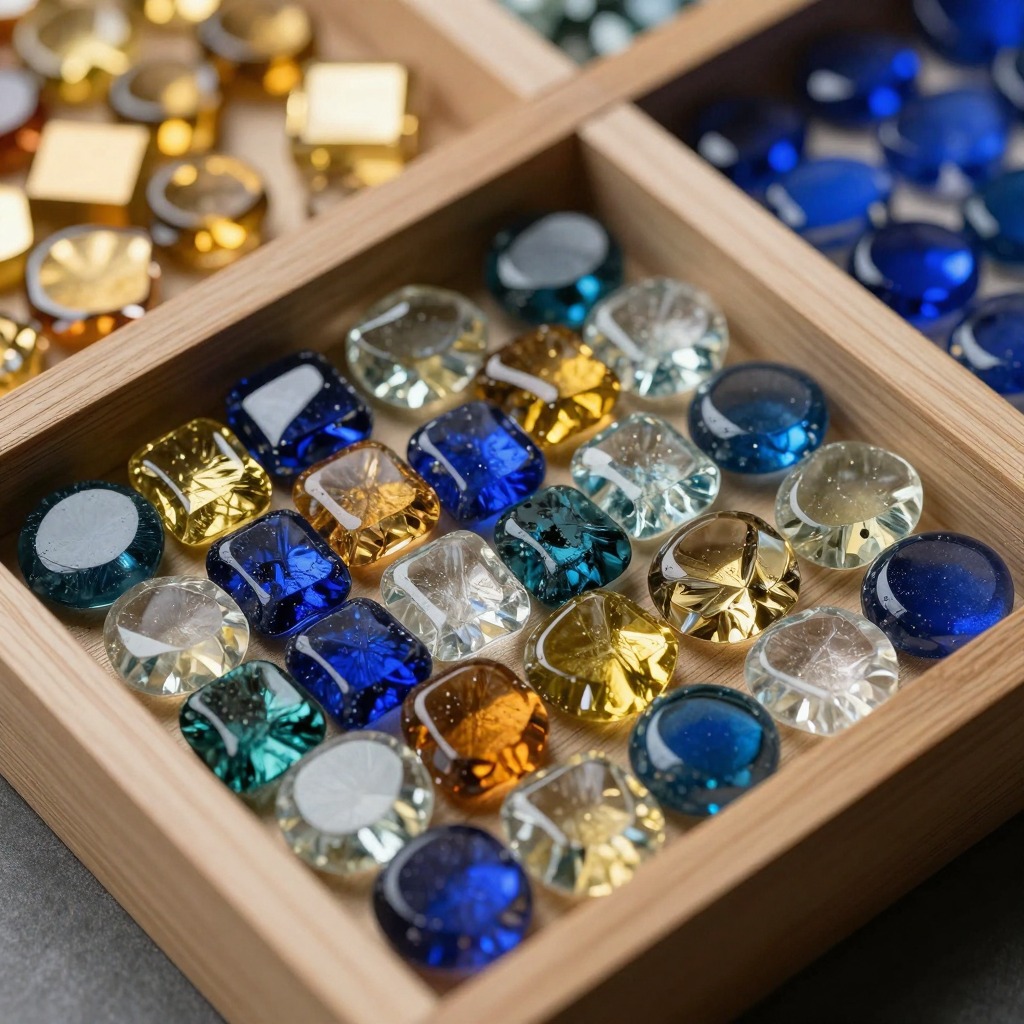
In an era of total digitalization, people crave tactile sensations and the creation of something tangible. Mosaic as a hobby perfectly meets this demand, offering a form of “slow art.” Unlike fast painting, every fragment—a tessera—requires a conscious choice and placement. It is akin to assembling a puzzle, but with the ability to create the pieces yourself. Psychologists note that the process of selecting shades and the physical impact on the material (breaking tiles or cutting glass) relieves stress and helps the creator enter a flow state.
Furthermore, modern interest is fueled by a reimagining of historical techniques. People are inspired by Byzantine mosaics with their gold smalti or the Catalan Modernism of Antoni Gaudí, who popularized the Trencadís technique (the use of broken ceramics). The ability to create durable objects that do not fade or deteriorate for decades makes this hobby more attractive than many fleeting pastimes. Today, mosaic has ceased to be merely a museum exhibit or a bathroom finish, evolving into a means of self-expression and a tool for interior design in a unique style.
Starter Kit: What to Buy for Your First 2,000–3,000 Rubles
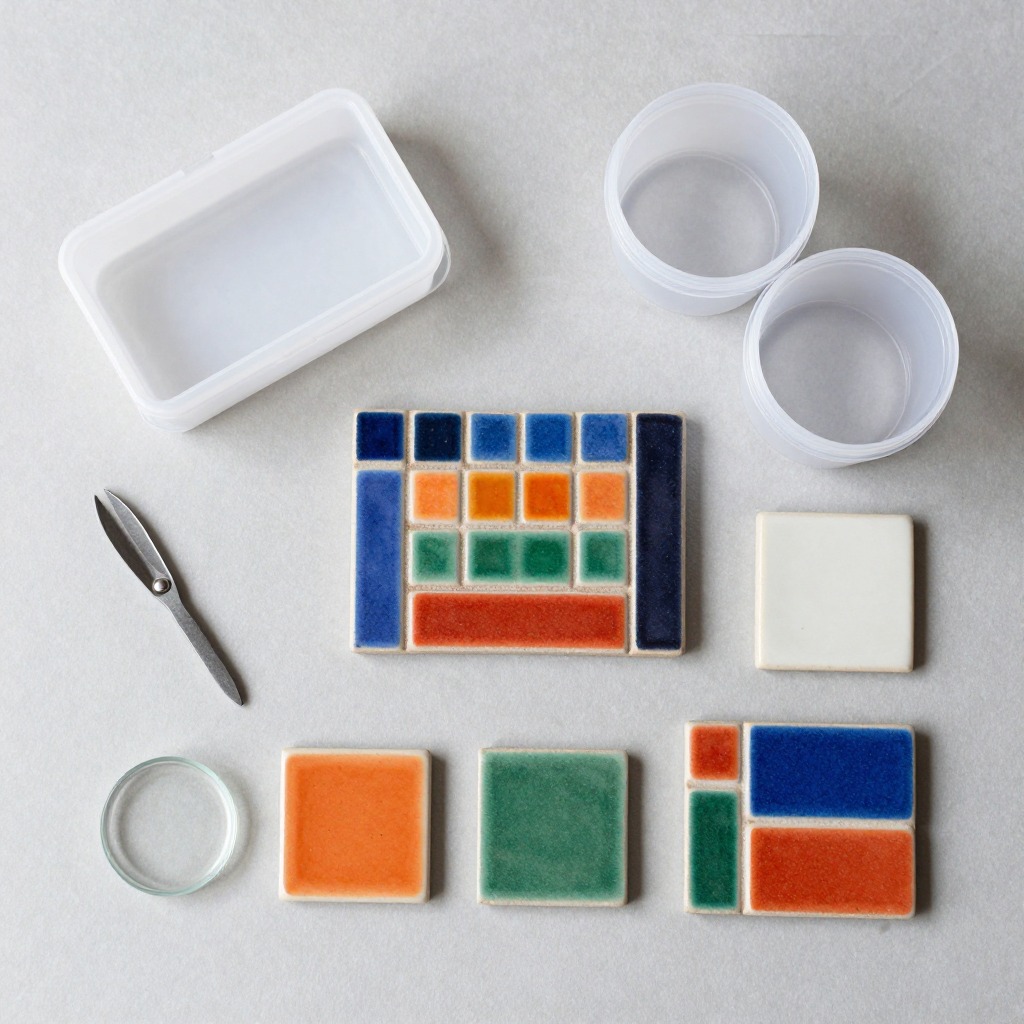
Many beginners mistakenly believe that starting out requires expensive glass-cutting machines or professional kilns. In reality, a basic kit for initial projects can be assembled for around 2,000–3,000 rubles. The most important tool is a pair of wheeled glass and ceramic nippers (wheel nippers). They cost between 800 and 1,200 rubles and allow you to neatly nip off pieces of the desired shape without crushing the material into dust. Unlike ordinary pliers, the rollers create a clean cut, which is critical for achieving straight lines.
To fix the elements in the beginning, ordinary PVA glue or an inexpensive cement-based tile adhesive (about 300–500 rubles per bag) is sufficient if the work is done on a rigid base. An MDF sheet or plywood 6–10 mm thick, which can be bought at a hardware store for 200–400 rubles, is an ideal base. Grout for the joints will cost 200–400 rubles per pack; for first projects, it is better to choose a cement-based grout in a neutral gray or white color. The remaining budget can be spent on safety goggles (about 200 rubles), as flying glass shards are the primary danger in this craft. As for the materials, you can start with remnants of old ceramic tiles, broken mirrors, or inexpensive colored smalti, which is often sold by weight in art supply stores.
First Steps: From Simple Coasters to Wall Panels
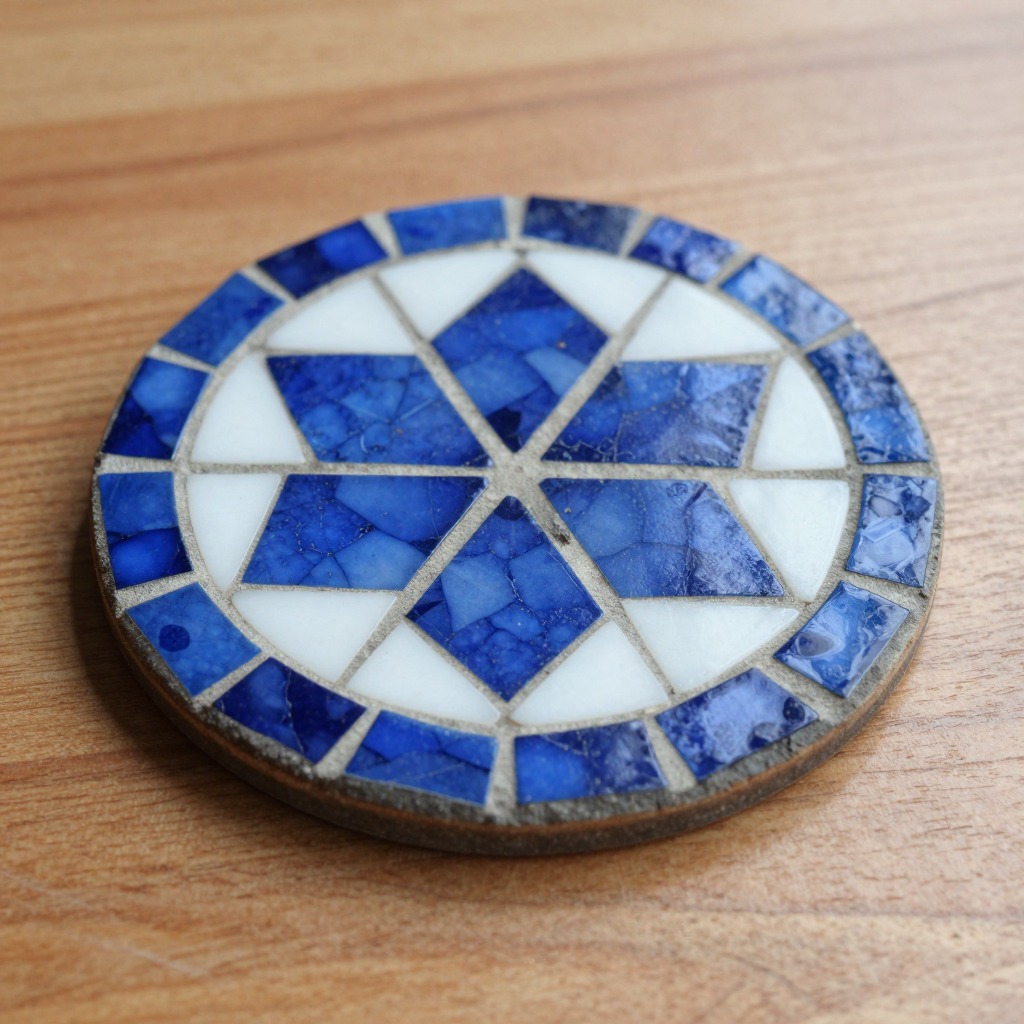
It is best to start with small forms to master the concept of “andamento”—the logic and direction of the lines along which the tesserae are laid. A first project could be a cup coaster or a small dish. Here, it is important to practice creating simple geometric shapes and smooth curves. Use the Opus Tessellatum technique, where elements are laid in even rows, or try the more free-form Trencadís style, creating a chaotic yet harmonious pattern from multicolored shards.
The second stage could be decorating a mirror frame or creating a small decorative panel on plywood. The process is always divided into four stages: sketching, cutting the material, gluing, and grouting. During the sketching phase, it is important to remember that mosaic does not tolerate excessive detail in small forms—it is better to use large color blocks. When gluing, leave gaps of 2–3 mm between elements; if the pieces are pressed too tightly, the grout will not penetrate the joints, and the work may begin to crumble. After the glue dries, grout is applied and spread with a rubber spatula, and after 15–20 minutes, the excess is removed with a damp sponge. It is at this moment that the work “comes together” as a whole, and the colors become more saturated due to the contrast with the joint.
Where to Learn Mosaic and Which Communities to Join
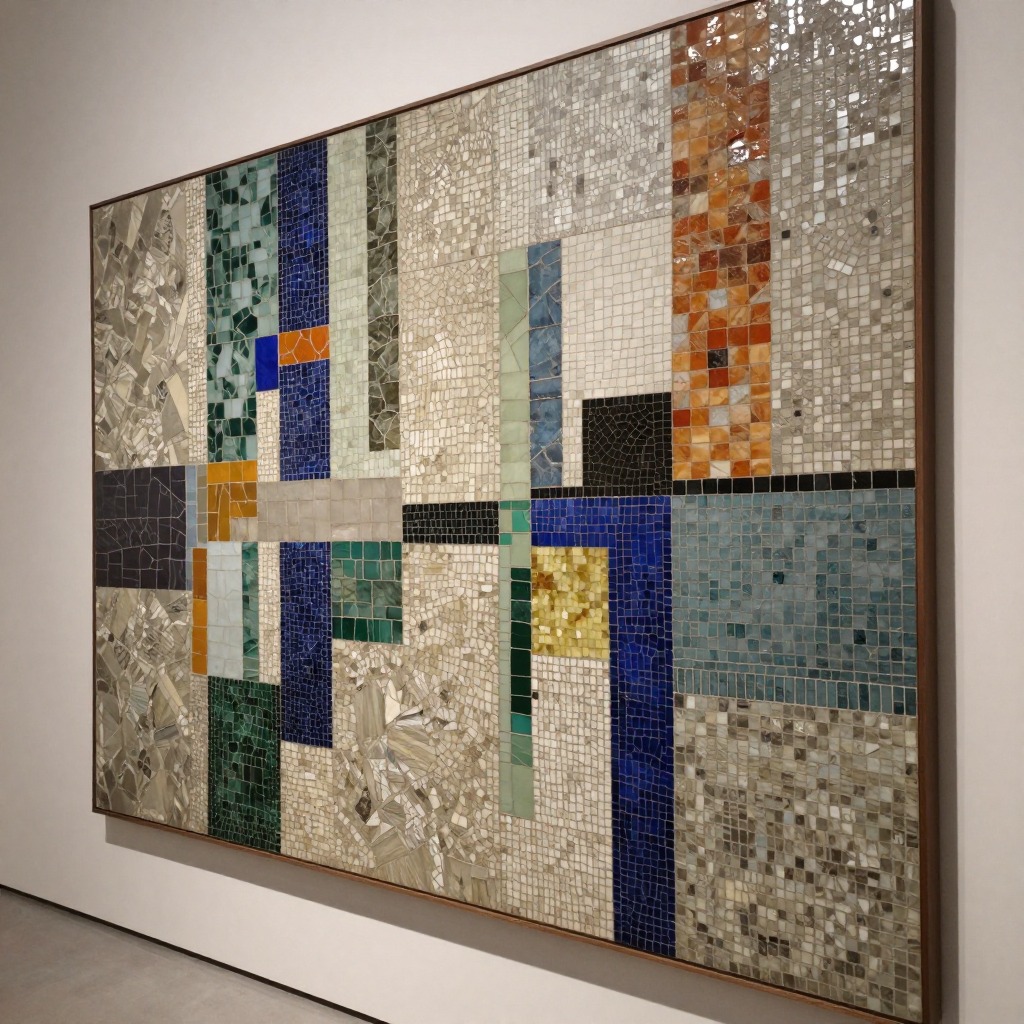
Modern mosaic education has long moved beyond academic workshops. The easiest way to start is through YouTube and Pinterest, where you can study the techniques of masters from Italy and Spain. Search for tutorials using terms like “mosaic for beginners” or “trencadis technique.” Particular attention should be paid to the Byzantine school, which teaches how to work with the tilt angle of the tessera to create a play of light, and the Florentine technique, which emphasizes precision and the elegance of lines.
For those who prefer face-to-face interaction, there are local art studios and ceramic workshops. Offline courses are useful because they allow you to work with professional equipment and gain access to rare materials, such as gold smalti or natural marble. There are also themed groups on social networks and mosaicist forums where masters share secrets for choosing grouts and ways to combat cracks in the base. Recently, the integration of AI into the creative process has been actively discussed in these communities. Artificial intelligence helps beginners overcome the “blank page” fear by creating complex patterns and color maps that are then transferred to real materials, significantly accelerating the design and composition learning process.
Accidental Discoveries: Stories of People in Mosaic Art
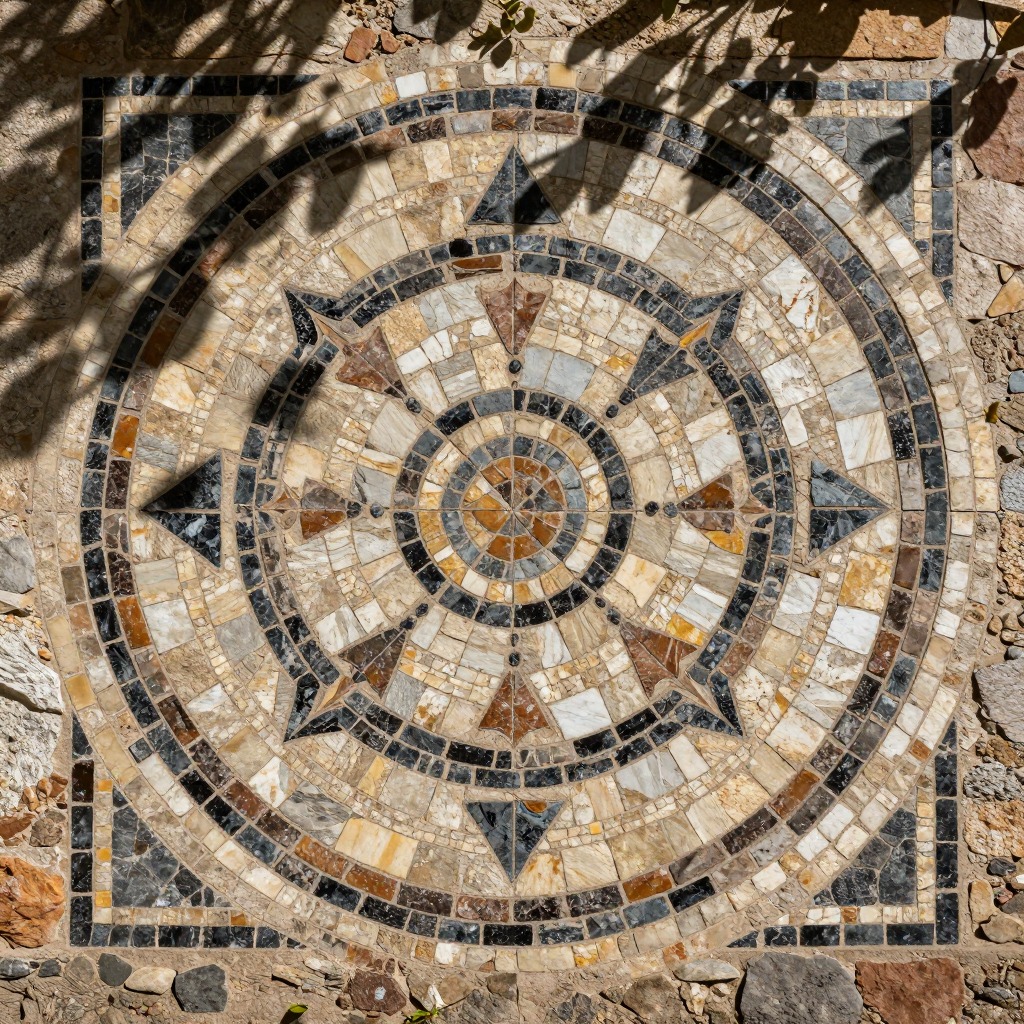
Many come to mosaic completely by chance, and it is often these stories that end in the creation of a unique style. One example is people who began doing this during home renovations. A accidentally broken tile in the bathroom or ceramic remnants found at a construction site become the starting point. Some, while trying to fix a favorite vase, discover that filling the cracks with colored glass looks more interesting than the original. This echoes the Japanese philosophy of Kintsugi, but in the context of mosaic, it turns into a full-fledged hobby of creating panels.
Related works in the gallery:
Another category of “accidental” masters are those inspired by the monumental art of their city. A vast number of mosaic panels remain on the walls of research institutes, factories, and residential buildings from the former USSR. Many modern enthusiasts start by trying to recreate this austere yet expressive style of Soviet Modernism, using rough concrete inserts and large forms. Such people often come to art from architecture or engineering, as mosaic requires a certain type of structural thinking. These stories prove that you don’t need an art education to start—curiosity and the desire to turn the fragments of something old into something entirely new and valuable are enough.
Creating a mosaic is a journey from chaos to harmony, accessible to anyone willing to spend a little time studying the material. If you want to create the perfect sketch for your first work or experiment with professional patterns, try the andamento.app service for generating mosaic layouts.