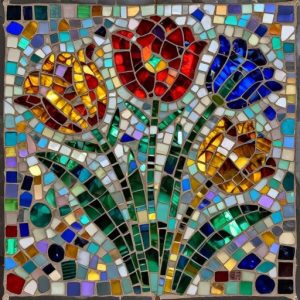
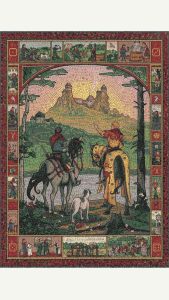
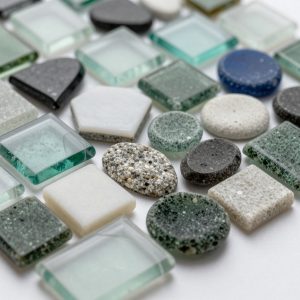
Online photo-to-mosaic conversion is a modern way to transform an ordinary digital snapshot into a work of art that mimics the craftsmanship of ancient masters. Today, technology allows one to go from a simple JPEG file to a complex pattern that looks like genuine smalti or ceramic inlay in just a few seconds. The combination of artificial intelligence and classical art canons opens new horizons for designers, artists, and anyone wishing to create unique decor for their interior.
AI Technologies and Modern Online Photo-to-Mosaic Art
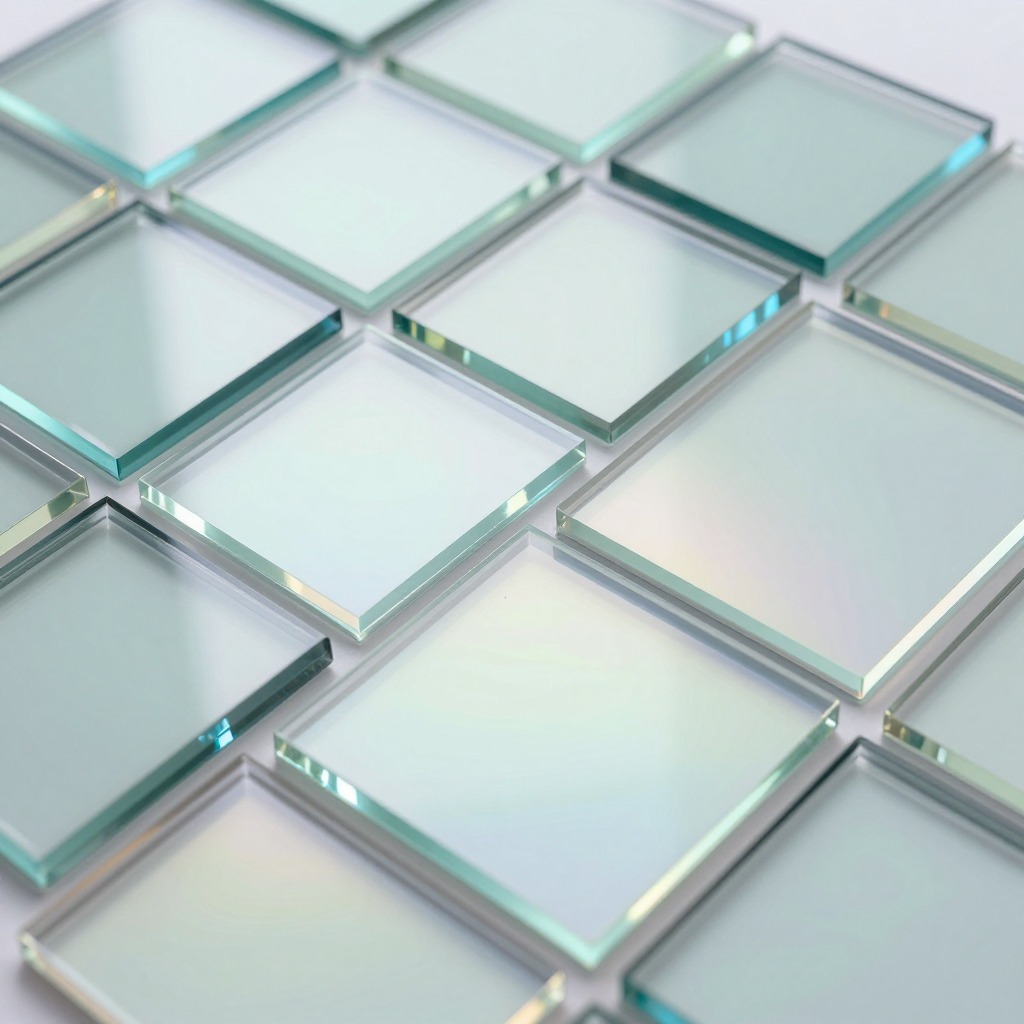
Modern online photo-to-mosaic conversion has evolved beyond the simple application of a “pixelation” filter. Today, it is powered by complex neural networks that analyze image depth, object boundaries, and color gradients. Unlike older methods, AI generation accounts for the concept of “andamento”—the rhythmic flow and direction of the stone placement, which in classical art determines the dynamics of the entire composition. For example, the technique of Opus Tessellatum involves the use of regular square elements, while Opus Vermiculatum allows for the creation of the finest, winding lines that imitate painting.
The use of AI enables the application of various styles: from the austere Byzantine style with its gold backgrounds and frontal compositions to the expressive Trencadís style made famous by Antoni Gaudí in Barcelona. Neural networks can simulate the texture of materials: matte stone, glossy glass, or porous ceramics. This means the algorithm does not simply break the photo into squares, but selects the shape and size of each virtual tessera (mosaic fragment) to preserve the recognizability of a face or landscape while adhering to the laws of mosaic art. The result is an image that looks like a physical object rather than a digital copy.
Overview of the andamento.app Service Features
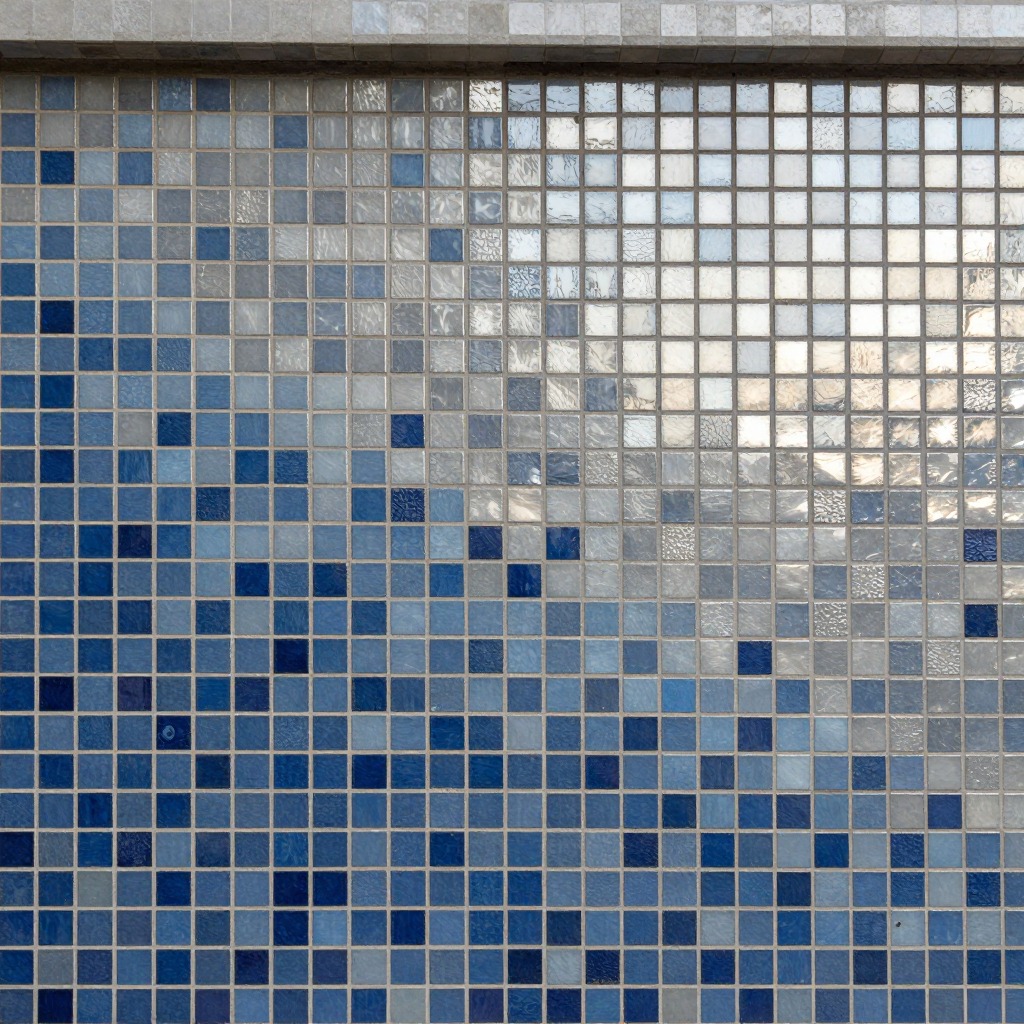
For those seeking a professional tool, the andamento.app service offers a sophisticated approach to creating digital mosaics. Unlike simple mobile editors, this tool focuses on artistic precision and a variety of techniques. Users can choose between styles such as Matrix mosaic, which emphasizes structural clarity, and MELTI mosaic, which creates smoother, “melted” transitions. Classical directions are also available: Byzantine, Florentine, and even the aesthetic of Soviet mosaics, characteristic of the large-scale panels of the 1960s–1980s with their specific color palette and monumentality.
The workflow in andamento.app is intuitive: after uploading a photo, the user adjusts the element size and grout density. Special attention is paid to material simulation—one can create a stained glass effect or a classic Roman mosaic. The service allows for fine-tuning of contrast and saturation so that the final result matches the chosen technique. For instance, for the Byzantine style, it is recommended to increase contrast and add golden hues, while for the Trencadís style, brighter, more chaotic color patches should be used. This transforms an ordinary photo into a full-fledged art object, ready for exhibition in the andamento.art gallery or for subsequent physical implementation.
Mobile Apps and Traditional Mosaic Software
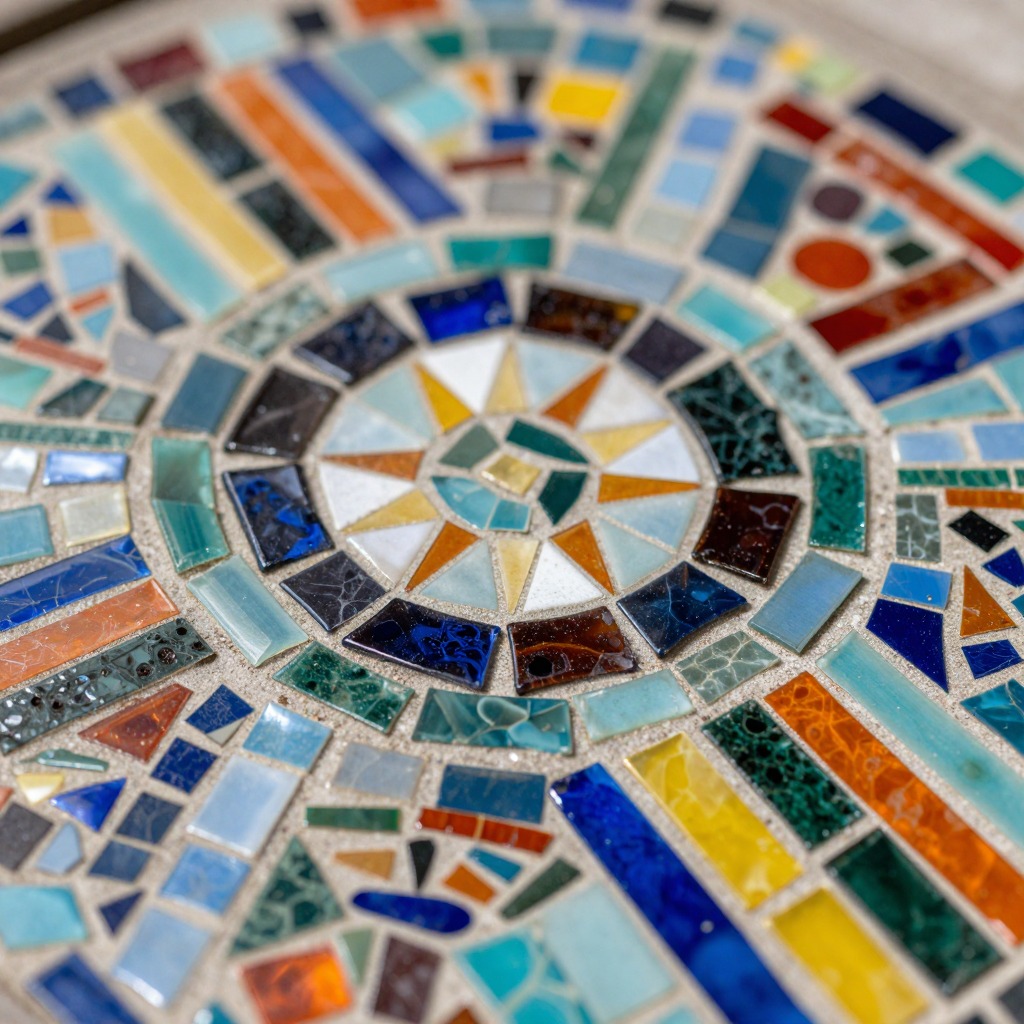
Beyond specialized AI services, online photo-to-mosaic conversion is available via mobile apps or graphic editors like Adobe Photoshop. In Photoshop, creating a mosaic usually involves the “Mosaic” filter or the use of custom brushes that mimic stones. However, this path requires manual refinement: the artist must manually draw the grout lines and add shadows to create the illusion of volume. Mobile apps most often offer “photomosaics”—a technique where a large image is assembled from thousands of tiny photographs. This is a completely different form of art, closer to collage than to classical mosaic.
The main drawback of most free apps is a lack of understanding of material structure. They simply break the image into a grid, ignoring the anatomy of the objects. In a professional approach, such as that implemented by AI tools, the layout lines follow the contours of the face or objects, creating volume. If you are striving for an artistic result rather than just a fun effect, it is worth choosing tools that support different layout techniques. The difference between a simple filter and AI generation is as vast as the difference between a paint-by-numbers kit and a full oil painting.
How to Choose the Perfect Photo for a Mosaic Conversion
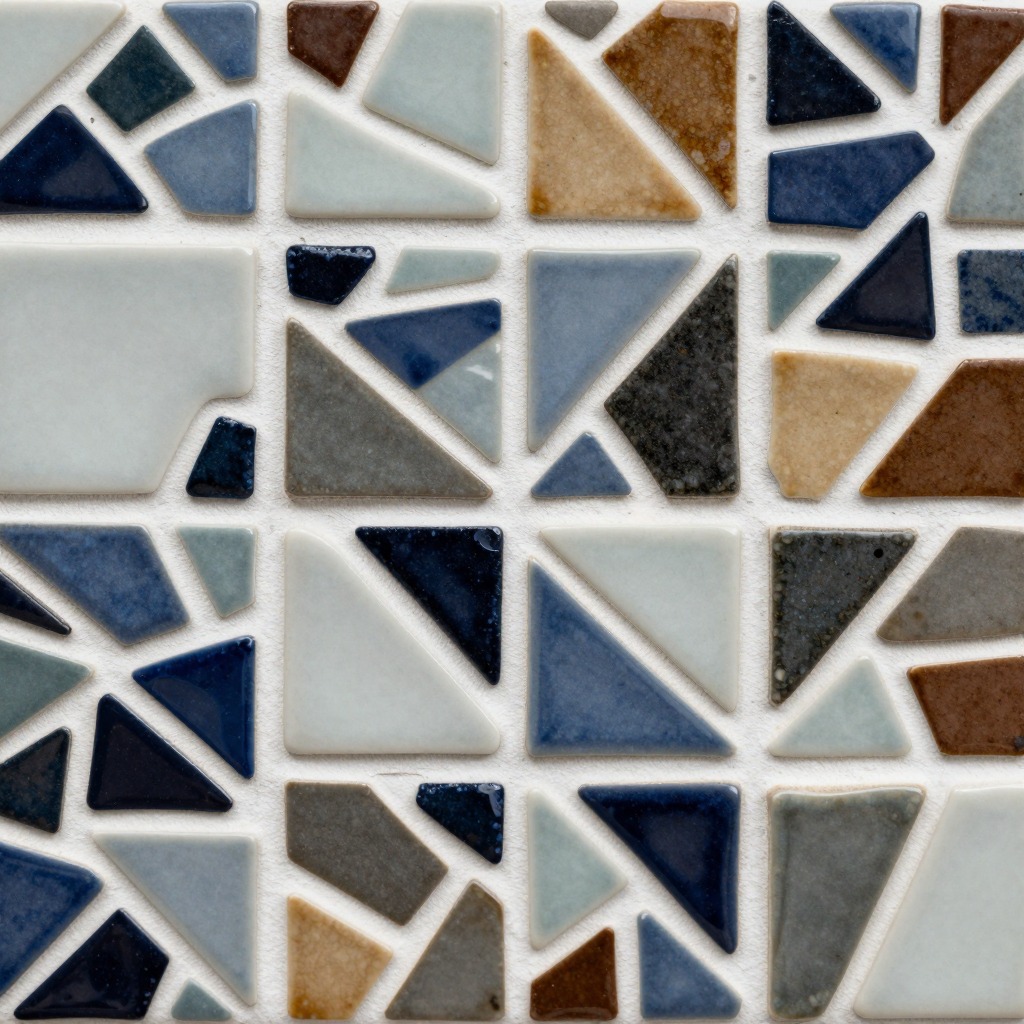
The quality of the final result depends 50% on the original shot. To make an online photo-to-mosaic conversion look impressive, one should choose images with high contrast and clearly defined boundaries. Portraits with directional lighting (the chiaroscuro effect), where light and shadow create deep volume, are ideal. Too soft or diffused light makes the image “flat,” making it harder for the neural network to determine exactly where the Andamento lines should run. It is also recommended to avoid backgrounds cluttered with detail; a solid or blurred background allows the focus to remain on the main object, which is characteristic of classical mosaic panels.
The color palette also plays a vital role. Saturated, pure colors translate better into mosaic tesserae, as they correspond to the actual shades of smalti and ceramics. If the photo is too pale, it is worth slightly increasing the saturation and clarity before processing. For landscapes, it is better to choose shots with pronounced horizontals or verticals (such as architecture or mountains), as this allows the algorithms to create beautiful rhythmic layout lines. Remember that mosaic is the art of simplification and generalization, so excessive detail in a photograph can lead to “visual noise” in the final digital layout.
From Digital to Reality: Printing and Manual Implementation
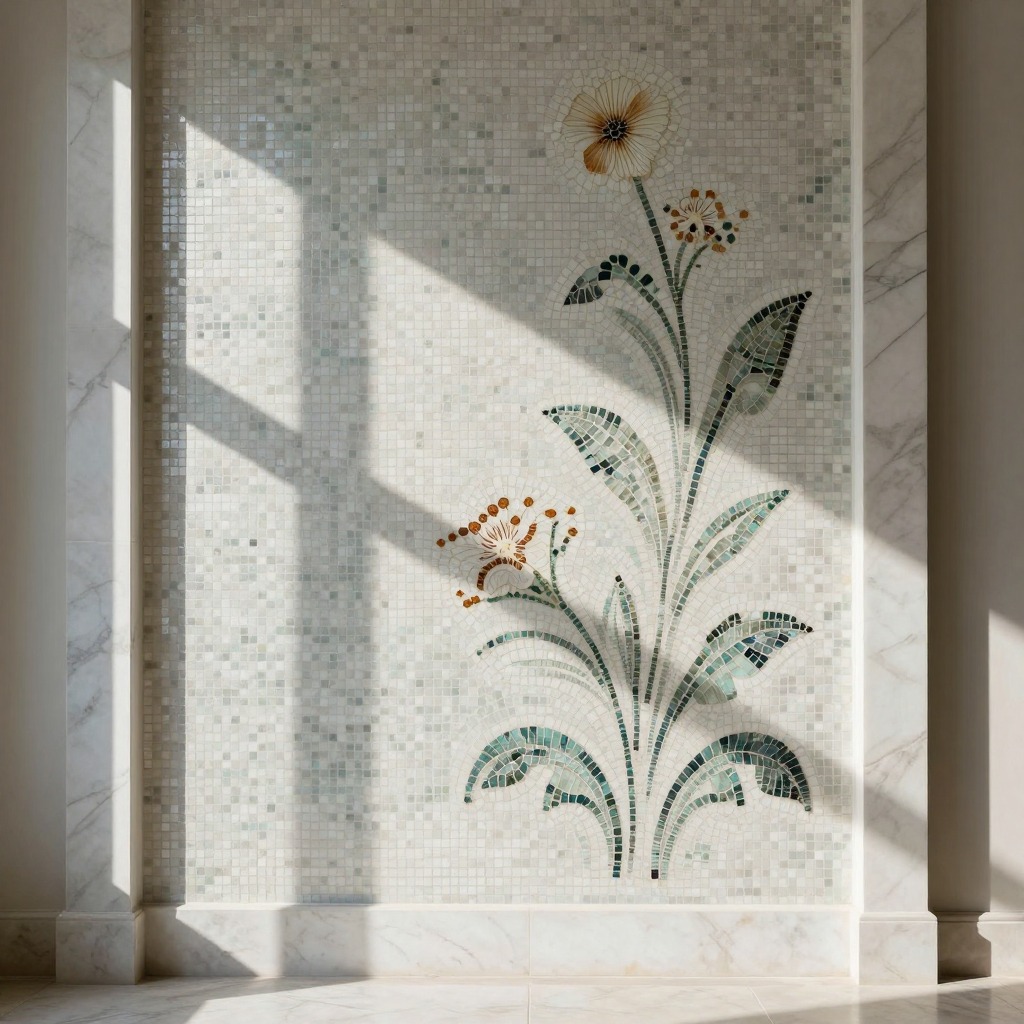
Once the digital file is ready, the question arises: how to bring it into the physical world? The simplest way is large-format printing on canvas or acrylic. Thanks to the high detail of AI generations, such a painting will look like a real mosaic from a distance of two meters. For a more premium effect, one can use printing on ceramic tiles or glass, which brings the result as close to the original as possible. Some studios offer UV printing followed by a transparent glossy varnish coating that mimics the shine of glass fragments.
Related works in the gallery:
For true connoisseurs and mosaic masters, a digital layout from andamento.app serves as the perfect “cartoon” (preliminary drawing). Instead of spending dozens of hours sketching, a master can use the AI scheme as a precise instruction for color selection and layout direction. The process works as follows: the digital image is printed full-size, after which real pieces of smalti, marble, or ceramics are adhered to the base (cement or glue), exactly following the lines and colors of the layout. This allows for the creation of professional panels in the Byzantine or Florentine style, even for those who may not have deep knowledge of composition but possess the technique of stone cutting.
If you want to create a unique digital masterpiece or prepare a project for real-world implementation, explore the possibilities of andamento.app. It is the fastest path from an ordinary photograph to a high-art mosaic.