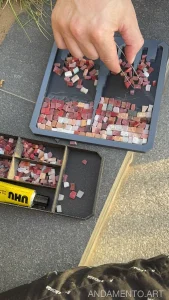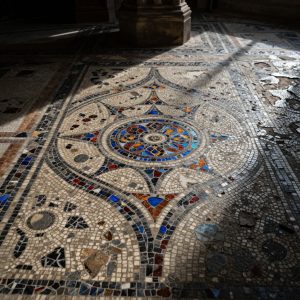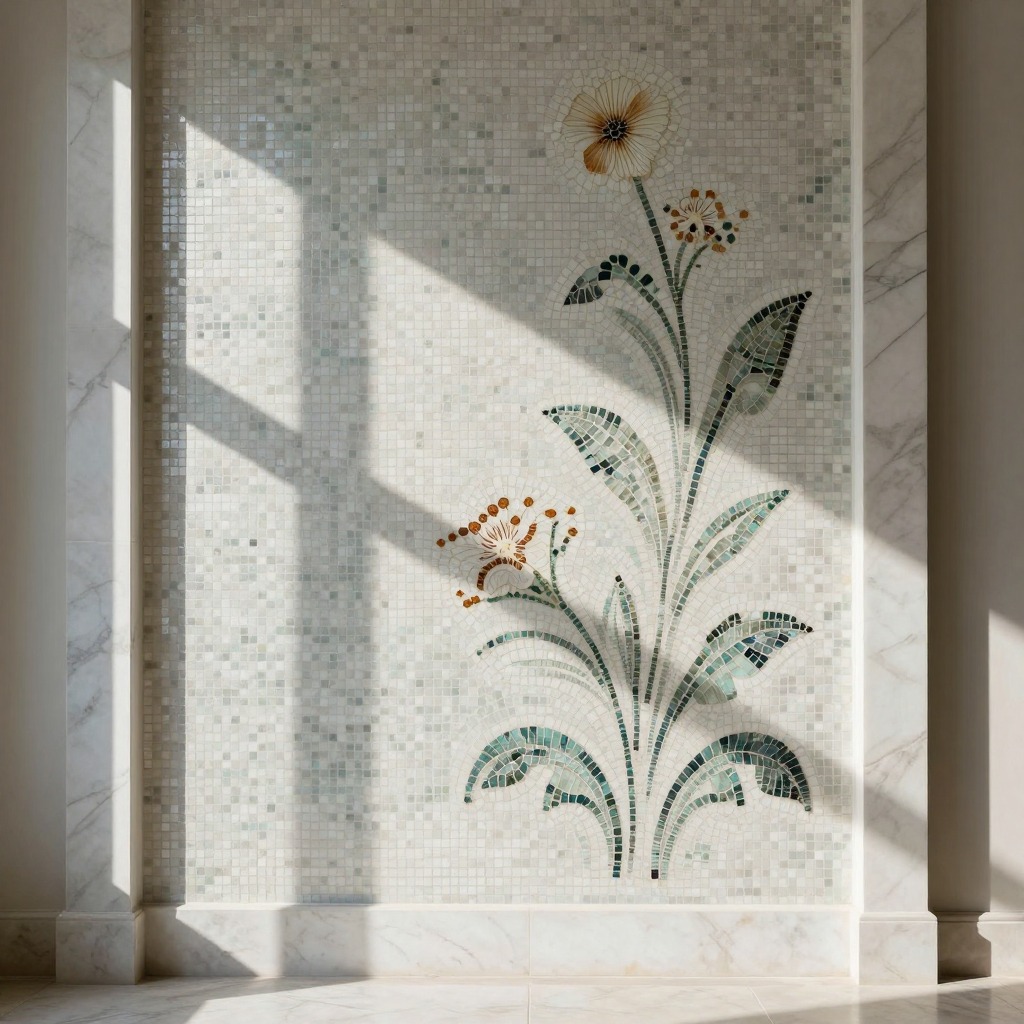
Soviet monumental mosaic art became the visual code of an entire era, transforming gray concrete walls into massive ideological canvases. It was not merely a decorative element, but a powerful tool for education and propaganda, blending the classical school of painting with the industrial scale of the 20th century. Today, these works are seen as a unique layer of cultural heritage, capturing utopian dreams of a bright future and the triumph of human reason.
Ideology and Development: Soviet Monumental Mosaic Art
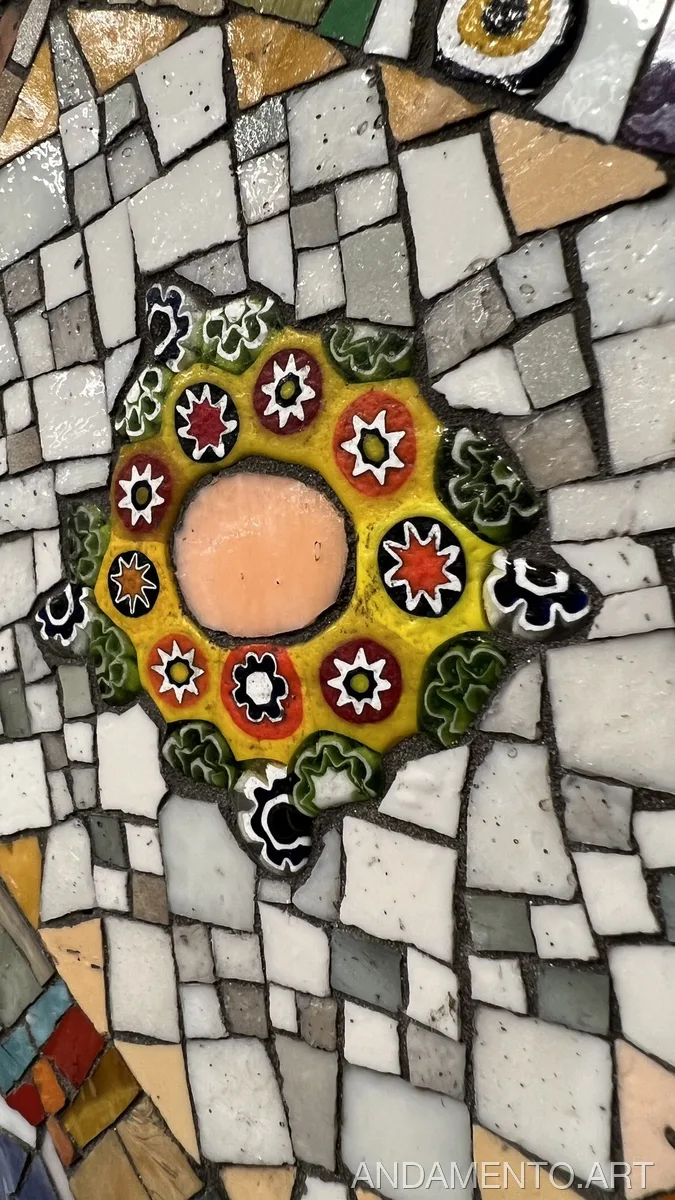
The heyday of mosaic art in the USSR spanned from the 1930s to the 1980s, a period when state policy demanded the creation of “art for the masses.” This process was rooted in Socialist Realism, which dictated the need to depict reality in its revolutionary development. Unlike intimate works, Soviet monumental mosaic art aimed for maximum scale, ensuring the viewer felt part of something grand. Mosaics were created not by individual artists, but by entire artels and specialized workshops, where painters worked in tandem with mosaic technicians.
In the 1930s, the Stalinist Empire style dominated, characterized by a love for luxury, gold smalt, and classical forms. However, by the 1960s, the aesthetic shifted toward a more concise and industrial style. Massive panels appeared on the gable ends of residential buildings and in factory lobbies, where elegant lines were replaced by geometric shapes and pastel tones. The primary goal was to turn the urban environment into an open-air gallery, where every passerby could encounter images of cosmonauts, workers, and scientists, making art accessible and understandable to every citizen.
Spaces of Triumph: The Metro, Facades, and Palaces of Culture
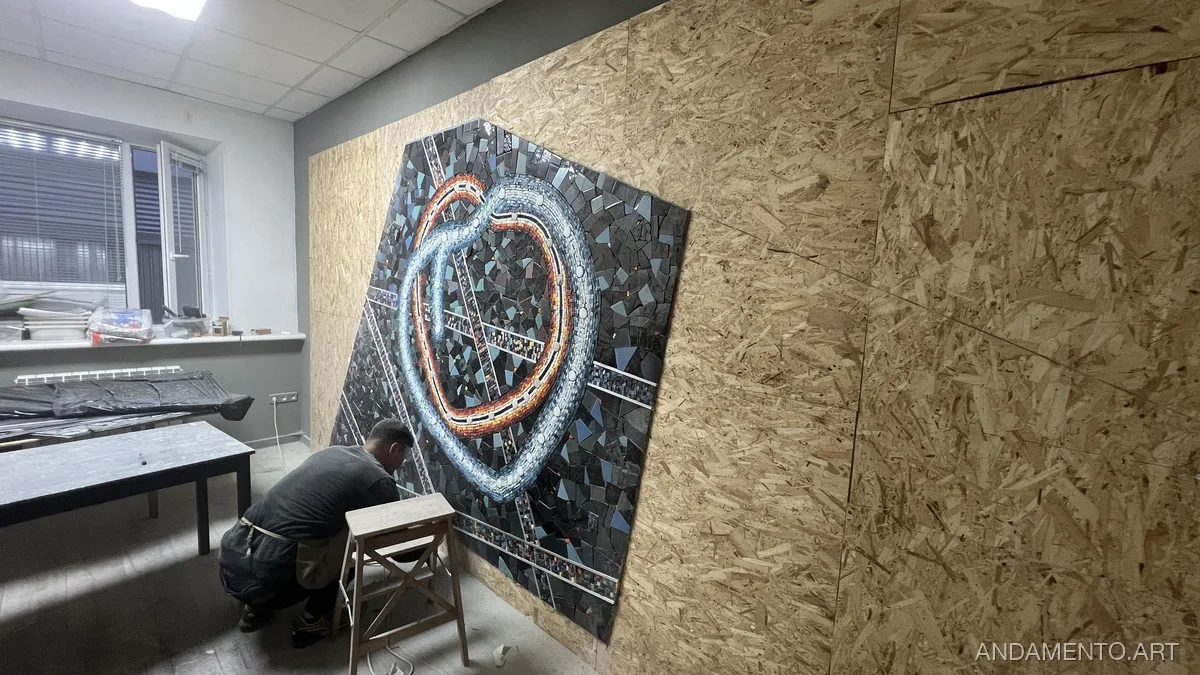
The most striking examples of monumentalism are concentrated in the Moscow Metro, often called the “palace for the people.” The Komsomolskaya and Mayakovskaya stations became benchmarks for the use of smalt and natural stone. Here, mosaics were integrated into the architecture to create a sense of infinite space and grandeur. The use of gold smalt in the vaulting allowed for a play of light, creating an effect of divine radiance around images of labor heroes and historical figures.
Equally important were the facades of Palaces of Culture (DK) and sanatoriums across the Union, from Crimea to the Baltics. Mosaic panels on the exterior walls of buildings served as visual landmarks and ideological beacons. In the 1970s, the technique of concrete panels became popular: mosaics were assembled on mesh in workshops and then inserted into prefabricated concrete blocks. This allowed even standardized panel housing districts to be decorated, transforming ordinary residential neighborhoods into spaces featuring elements of high art. Such works often focused on themes of peace, the friendship of nations, and space exploration, utilizing a vibrant palette of blue, orange, and green hues.
Great Masters: Deineka, Korin, and the Legacy of Vasnetsov
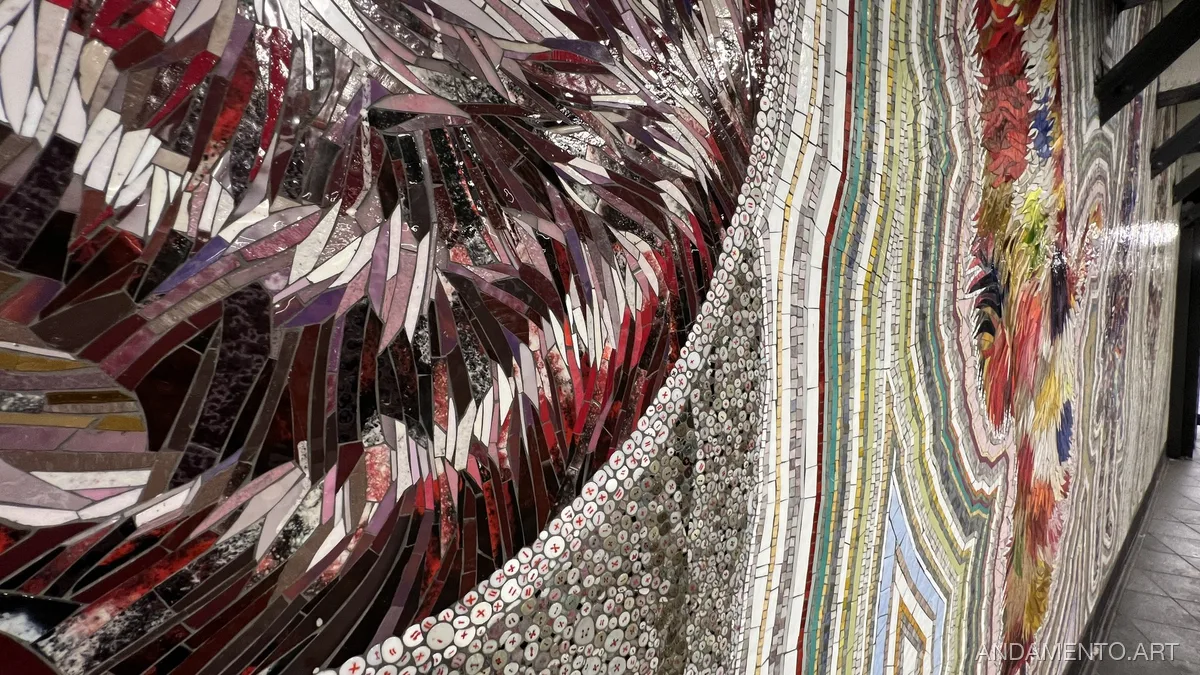
Creating monumental canvases required a specific vision of composition, as mosaics lack the fluidity of oil painting. Alexander Deineka became one of the primary ideologues of this movement. His works are characterized by dynamism, a clear rhythm, and athletic figures. Deineka masterfully translated his concise forms into smalt, creating images of the “new man”—strong, healthy, and striving toward the future. His influence is evident in most of the USSR’s sports and industrial mosaics, where the emphasis was on movement and energy.
Pavel Korin brought psychological depth and monumental stillness to mosaic art. His approach was closer to classical iconography and frescoes, lending his works a sense of solemnity and spiritual significance. Although Viktor Vasnetsov worked before the main peak of Soviet monumentalism, his work on the mosaics of St. Vladimir’s Cathedral laid the foundation for the Russian school of mosaic art. Soviet masters drew on his experience in selecting color transitions and working with the texture of stone. These artists transformed mosaic from a simple craft into a full-fledged form of high art, where every tessera (piece of smalt) contributed to the overall emotional effect.
Technologies and Materials: From Smalt to Concrete Slabs
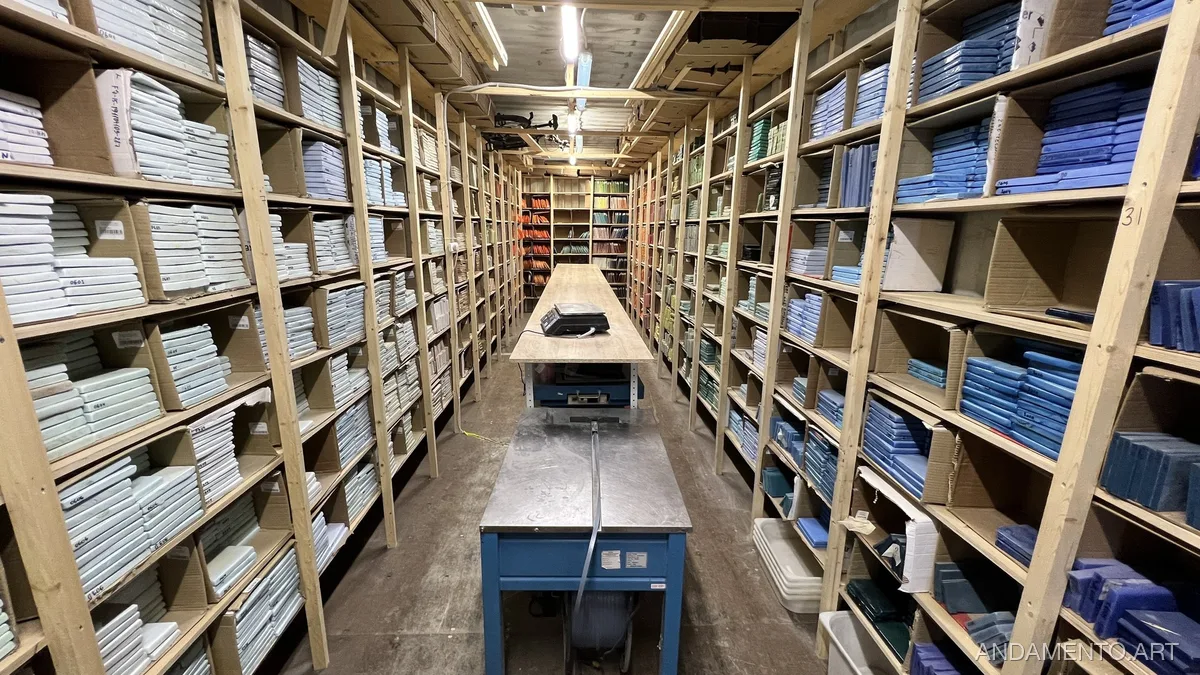
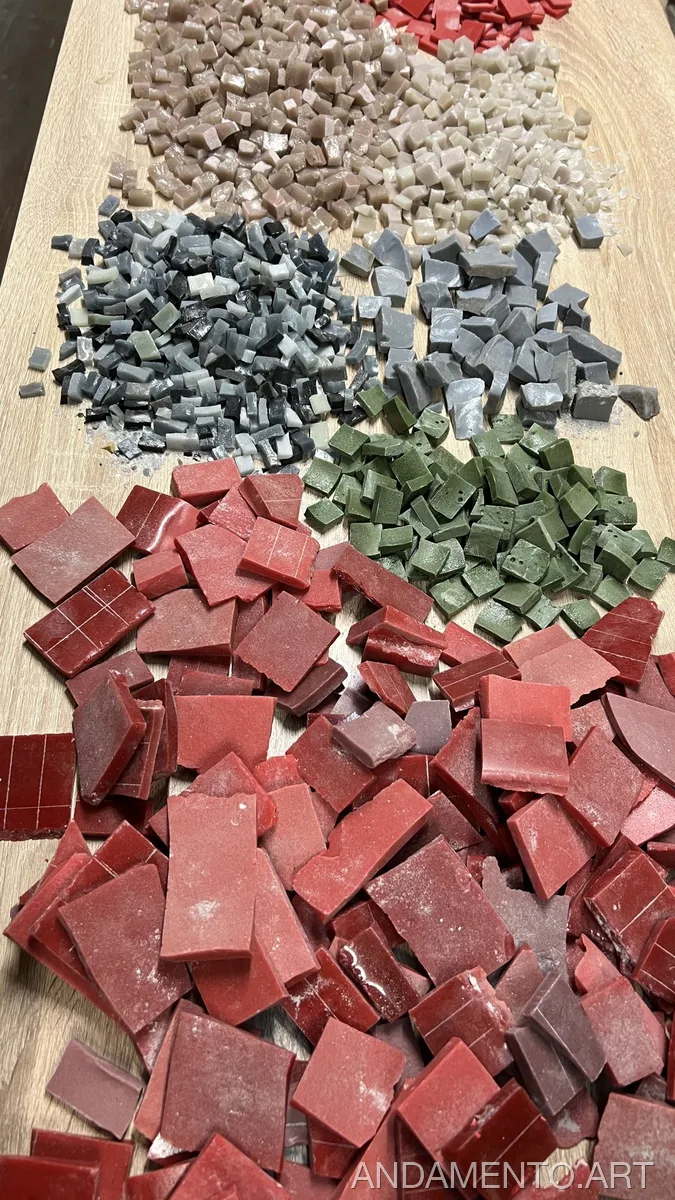
The technical side of Soviet mosaics was incredibly complex. The primary material was smalt—colored opaque glass fired in special furnaces with added metal oxides to achieve saturated colors. Smalt was valued for its durability and its ability to reflect light from different angles. High-level works utilized the “direct method,” where the master inserted pieces of glass directly into the mortar, creating a living, vibrating surface.
With the rise of industrial construction in the 1960s, there was a shift to the “indirect method.” The artist would create a full-scale sketch, after which mosaicists assembled the panel on a paper base using glue. This smalt “carpet” was then transferred to the wall. This significantly accelerated the process of decorating cities. Natural marble, onyx, and travertine were also introduced, adding a natural monumentality to the works. The combination of glossy smalt and matte stone allowed for complex light-and-shadow contrasts that remained legible even from a distance of several dozen meters.
The Tragedy of Lost Masterpieces and the Challenge of Preservation
Unfortunately, many monuments of Soviet monumental mosaic art have been irretrievably lost. In the 1990s and 2000s, a wave of demolitions of old factories and administrative buildings, along with renovations in the metro, led to the destruction of thousands of square meters of unique panels. Many mosaics were simply painted over with cheap paint or chipped away during facade repairs, dismissed as valueless due to their ideological content. A vast number of works in the provincial cities of the USSR are now in critical condition, with smalt falling out due to the different thermal expansion rates of concrete and glass.
Today, enthusiasts and art historians are attempting to save the remnants of this heritage. Digital archives are being created, surviving fragments are being photographed, and some panels are being moved to museums. The problem is that monumental art is, by definition, tied to architecture; a mosaic separated from its wall loses its original meaning and scale. Nevertheless, the recognition of these works as part of the history of global modernism is prompting authorities and private patrons to consider the restoration of objects that were once intended to last forever.
Digital Reimagining: Soviet Aesthetics in AI Art
In the modern era, interest in Soviet monumentalism has taken a new form through artificial intelligence technologies. AI art allows not only for the reconstruction of lost masterpieces but also for the creation of new works inspired by the aesthetics of Socialist Realism. Using modern algorithms such as Matrix mosaic or MELTI mosaic, artists can simulate the specific graininess of smalt, characteristic color transitions, and the monumental composition typical of the works of Deineka or Korin.
Related works in the gallery:
The modern reimagining lies in the fact that AI removes the rigid ideological ties, leaving behind pure aesthetics: powerful forms, heroic pathos, and a unique texture. This makes it possible to create digital mosaics that look like originals from the 1960s while reflecting contemporary meanings. Consequently, Soviet monumental mosaic art continues to live on, transforming from physical concrete and glass into digital pixels, while preserving its majesty and inspiring new creators worldwide.
If you want to create your own work in the style of monumental mosaic or turn any photo into a smalt masterpiece, try the tools at andamento.app.