The mosaics of Ravenna, with a history spanning over fifteen centuries, represent a unique archive of visual culture, freezing the ambitions of emperors and the prayers of saints. This Italian city became a true ark of antiquity and the early Middle Ages, preserving within its walls the finest examples of art that were lost in Rome or Constantinople to war and fire. Today, Ravenna is recognized as a UNESCO World Heritage site, as it hosts the world’s densest concentration of Byzantine art, illustrating the transition from classical Roman realism to the mystical symbolism of the East.
Why Ravenna Became the World Capital of Mosaics: The Story of Its Golden Age

The city did not acquire the status of “mosaic capital” by chance, but rather due to its strategic location and the political upheavals of the 5th and 6th centuries. In 402 AD, Ravenna became the capital of the Western Roman Empire, as its marshy terrain and proximity to the sea provided a natural defense against barbarians. Later, the city fell under the control of the Ostrogoths and was subsequently returned to Byzantium in 540 AD by Emperor Justinian I. It was during this period that Byzantine art reached its zenith, turning the city into a showcase of imperial grandeur.
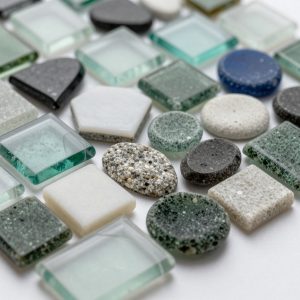
Masters of that era used a special material called smalt. Unlike ordinary stone or marble, smalt was colored opaque glass, which allowed for an incredible saturation of hues. Each fragment, or tessera, was selected based on how light would reflect off the surface of the wall. In Ravenna, mosaics ceased to be mere floor decorations, as they had been in Pompeii, and moved to the walls and vaults, creating an effect of “heavenly space” that surrounded the believer, fully immersing them in a sacred atmosphere.
Basilica of San Vitale: The Imperial Triumph of Justinian and Theodora
The Basilica of San Vitale, built in the 6th century, is the pinnacle of Byzantine architecture. The temple’s greatest treasures are two famous panels depicting Emperor Justinian I and his wife, Theodora. These mosaics are not merely portraits, but powerful political manifestos. Justinian is positioned at the center of the procession, holding a golden paten for the Eucharist, while Theodora holds a golden chalice. Their figures are surrounded by courtiers and guards, emphasizing the unity of secular and spiritual power.
The technical execution of these panels is stunning: each tessera is set at a slight angle so that the light entering the basilica creates a living shimmer. The smalt used here is of the most expensive variety, and the gold background erases the boundaries between the earthly world and eternity. The characters’ gazes are directed straight at the viewer, creating a sense of presence. It is important to note that Justinian and Theodora likely never visited Ravenna in person, but their mosaic images served as a constant reminder that the city was under the protection and control of Constantinople.
Mausoleum of Galla Placidia: The Depth of Blue and the Starry Sky
While San Vitale dazzles with gold, the Mausoleum of Galla Placidia, dating back to the 5th century, captivates with its deep blue color. Here, the mosaics of Ravenna—whose history is rooted in the late Roman era—demonstrate a different aesthetic. The vault of the mausoleum represents an infinite night sky strewn with golden stars. This is one of the earliest and most powerful examples of using color to convey metaphysical meaning: the dark blue background symbolizes the infinity of the cosmos and the divine mystery.
The “Good Shepherd” scene deserves special attention. Christ is depicted as a young man in golden robes, carrying a lost sheep on his shoulders. In this image, the influence of antique art is still palpable—the soft folds of the clothing, the natural proportions of the body, and the landscape background with green hills. However, the use of smalt is already beginning to shift the perception: colors become more contrasting and contours more defined. Byzantine art is just beginning to take shape here, moving from earthly realism toward an idealized image of the divine.
Neonian Baptistery: Sacred Geometry and the Rite of Baptism
The Neonian Baptistery is one of the city’s oldest buildings, where mosaics perform a vital liturgical function. The central dome is adorned with the scene of the Baptism of Christ in the Jordan. The composition is built around a strict circle: Christ is at the center, surrounded by a ring of angels and saints. This symbolizes the unity of the heavenly and earthly realms at the moment of the sacrament. Here, tesserae are used to create complex geometric ornaments that frame the main scene, establishing rhythm and order.
Interestingly, one can trace the evolution of style within the Baptistery. The lower parts of the walls are decorated with simpler floral motifs, while the dome demonstrates the highest level of craftsmanship. The smalt in these works has a more matte tone, creating a feeling of tranquility and peace. The geometric patterns, reminiscent of carpets, are characteristic of Eastern traditions and underscore Ravenna’s status as a bridge between the West and the East. Every element here is subordinated to the idea of harmony and divine order.
The Theology of the Gold Background: Light as a Symbol of Divine Presence
One of the primary characteristics of Ravennate mosaics is the dominance of the gold background. In the Byzantine tradition, gold was not a sign of wealth or luxury in a material sense. On the contrary, it held a deep theological meaning. Gold symbolized the “Unfading Light”—the divine energy that has no shadow and is not subject to time. When a master inserted a gold tessera (glass with a thin layer of gold leaf inside), they created a surface that did not absorb light but reflected it back, creating a shimmering radiance.
This technique allowed the figures of saints and emperors to be completely isolated from earthly space. The absence of perspective and realistic landscapes in the mosaics of San Vitale or the Baptistery intentionally transports the action to another, spiritual dimension. A viewer entering the temple found themselves in a space where time stood still, and the surrounding gold created a sense of God’s presence. Thus, Byzantine art used material means (glass and metal) to express immaterial, mystical ideas, transforming architecture into an icon.
Today, when we look at these masterpieces, we see more than just ancient walls; we see an encrypted code of faith and power. Ravenna preserved what was lost in other parts of the empire, allowing us to understand exactly how the medieval canon of beauty was born. If you wish to experience this art in a modern format, try creating your own digital masterpieces at andamento.app, where AI helps translate classical mosaic techniques into contemporary art.