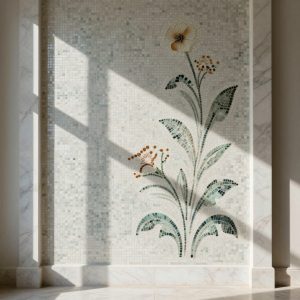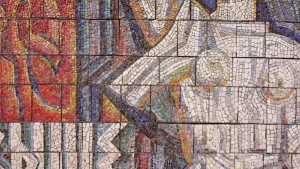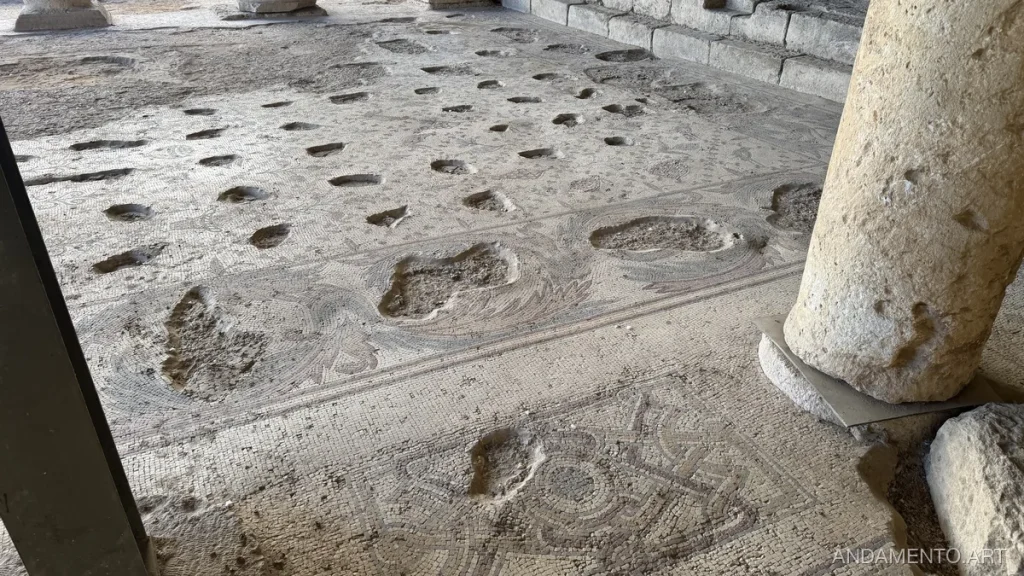
Natural stone for mosaics remains one of the most sought-after materials due to its durability, noble texture, and natural aesthetics. Unlike synthetic counterparts, each fragment of stone has a unique pattern, making each piece inimitable. The correct choice of stone determines not only the appearance of the work but also its resistance to external influences.
Types of Natural Stone for Mosaics and Their Properties
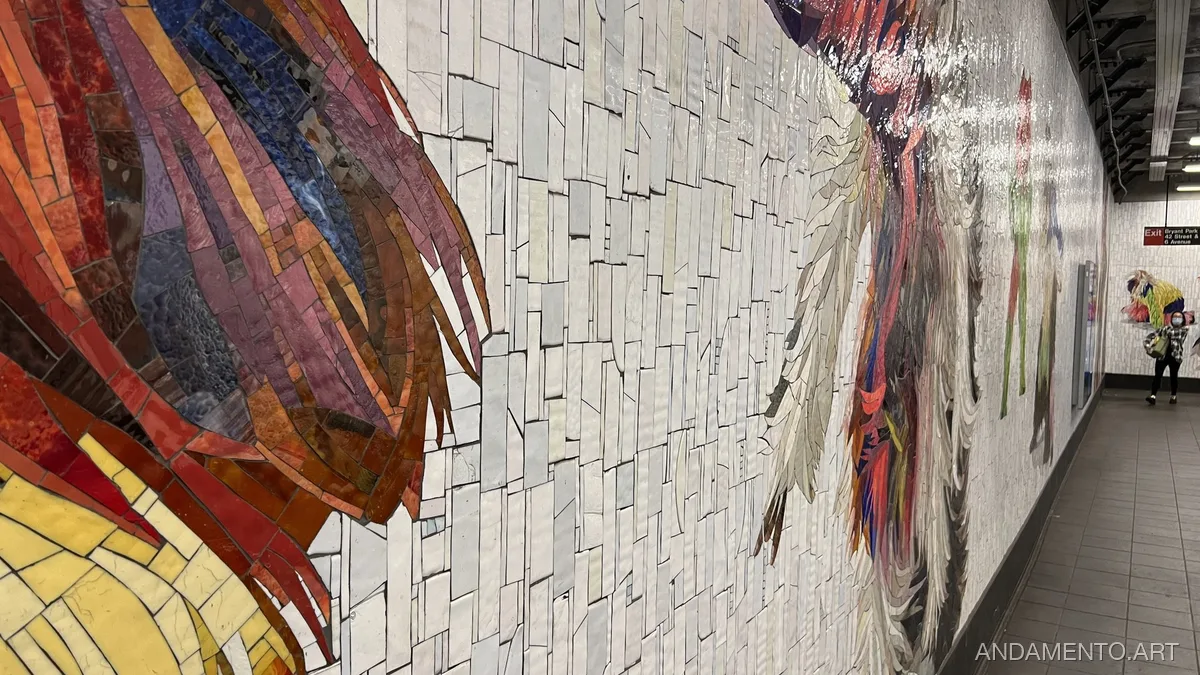
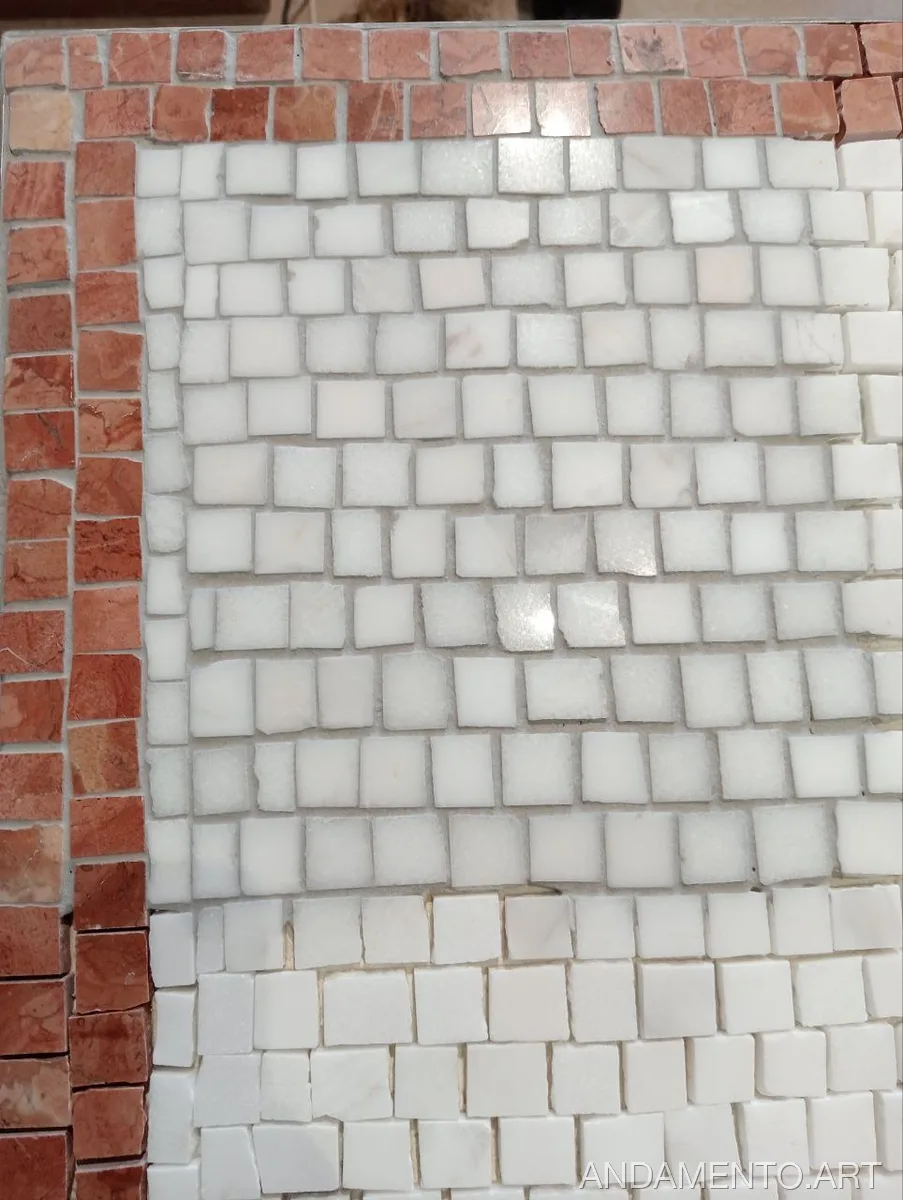
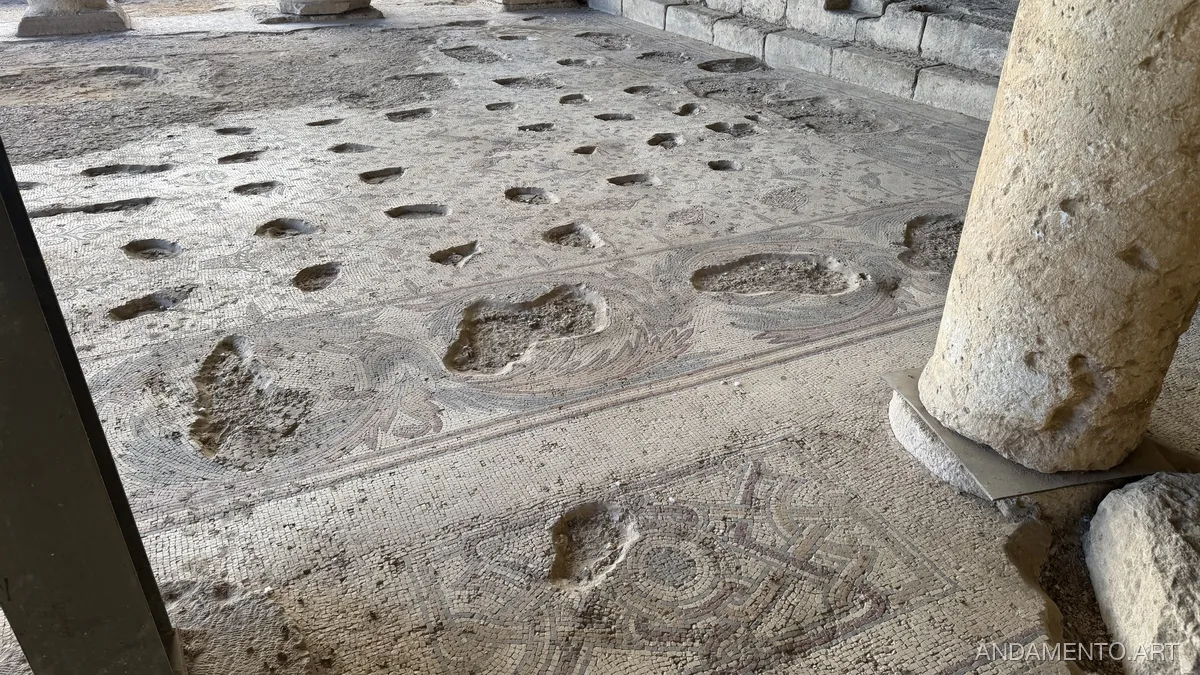
Nature provides a vast selection of materials, each with its own physical and chemical characteristics. The following types are most commonly used in professional mosaics:
- Marble. This is the benchmark of classic style. It is available in a wide palette: from pure white and gray to pink, black, and even green. Marble polishes well, has a soft sheen, and a pleasant tactile feel. However, it is quite hygroscopic, so it requires protection in “wet” areas.
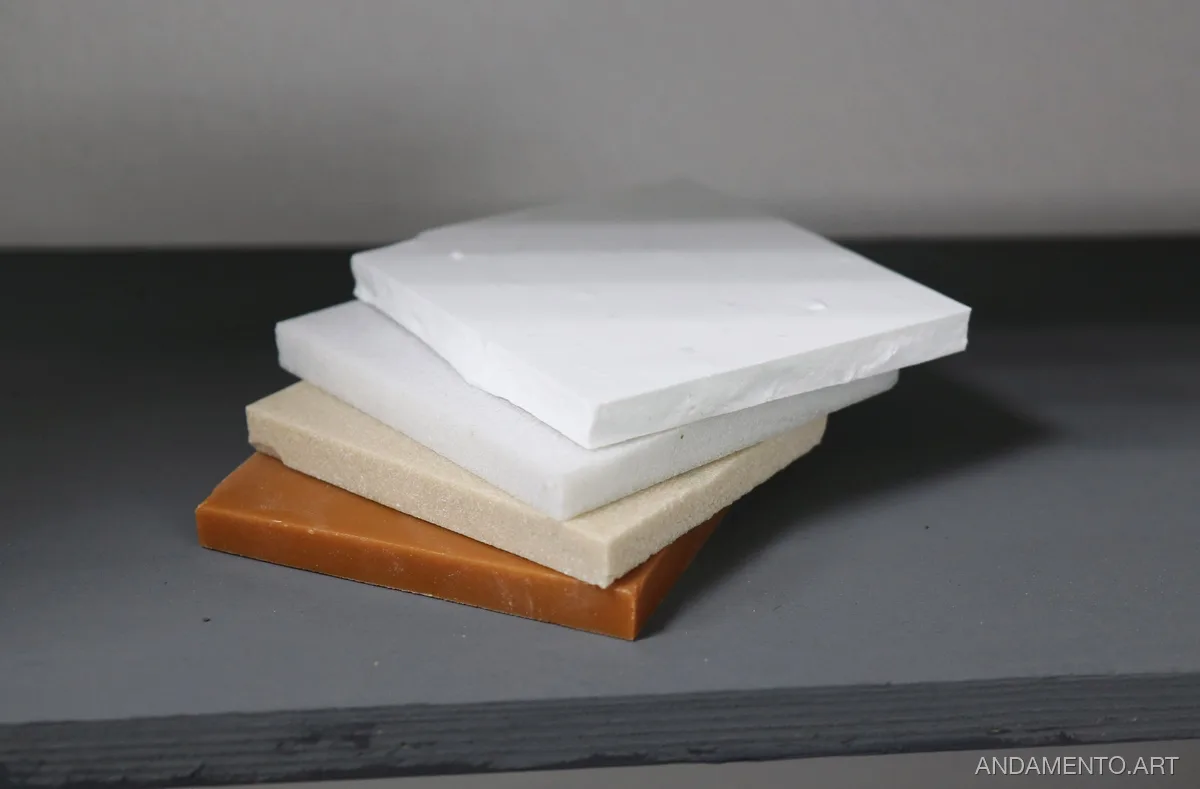
- Travertine. Recognizable by its porous structure. The main shades are beige, cream, and terracotta. Travertine creates a sense of warmth and natural coziness, often used in interiors with a Mediterranean style.
- Limestone. A relatively soft stone that is easy to chip. This makes it ideal for training beginner artisans and creating large-scale interior panels.
- Granite and Gabbro. The most durable and wear-resistant types. Granite absorbs virtually no moisture and has high density, making it indispensable for mosaic floors with high traffic.
- Onyx and semi-precious stones. Jasper, agate, and onyx are used to create accents or in high-end works. Onyx is valued for its translucency – when backlit, such panels literally “glow” from within.
- Slate. Characterized by its distinct layering. The gray and grayish-green shades of slate create a natural relief effect, which looks particularly striking in landscape design.
For those who want to start working without complex color matching, the materials store offers ready-made solutions and kits where stones are already selected by color scheme.
The Florentine Tradition and the Pietra Dura Technique
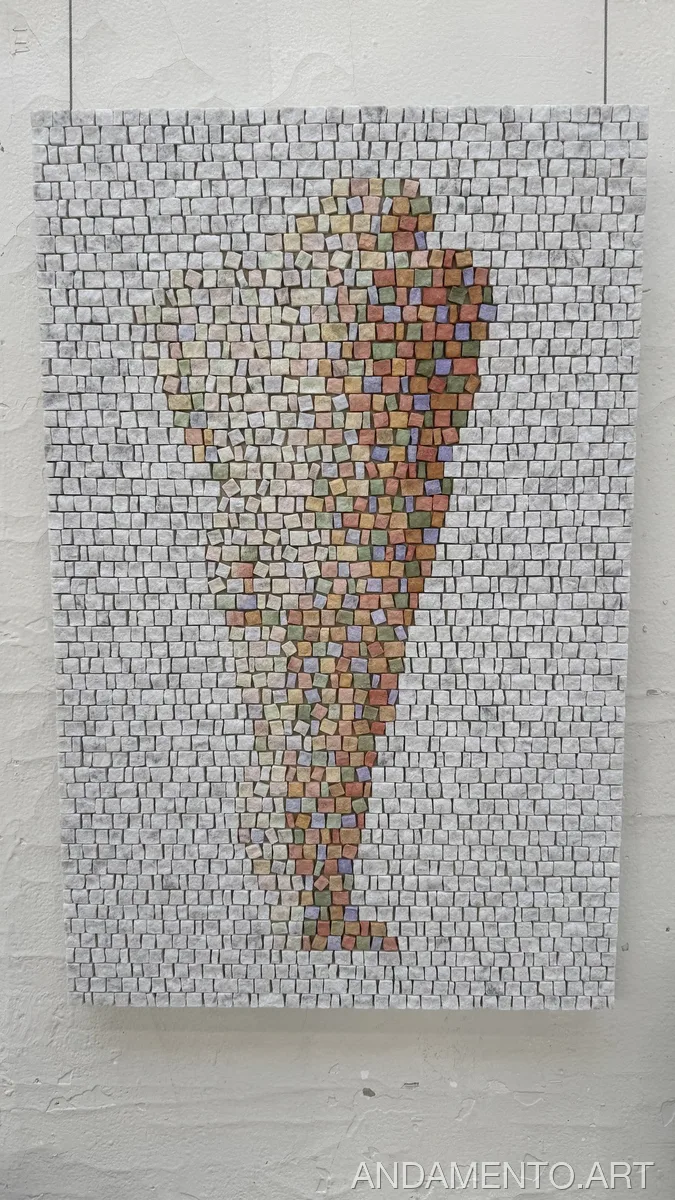
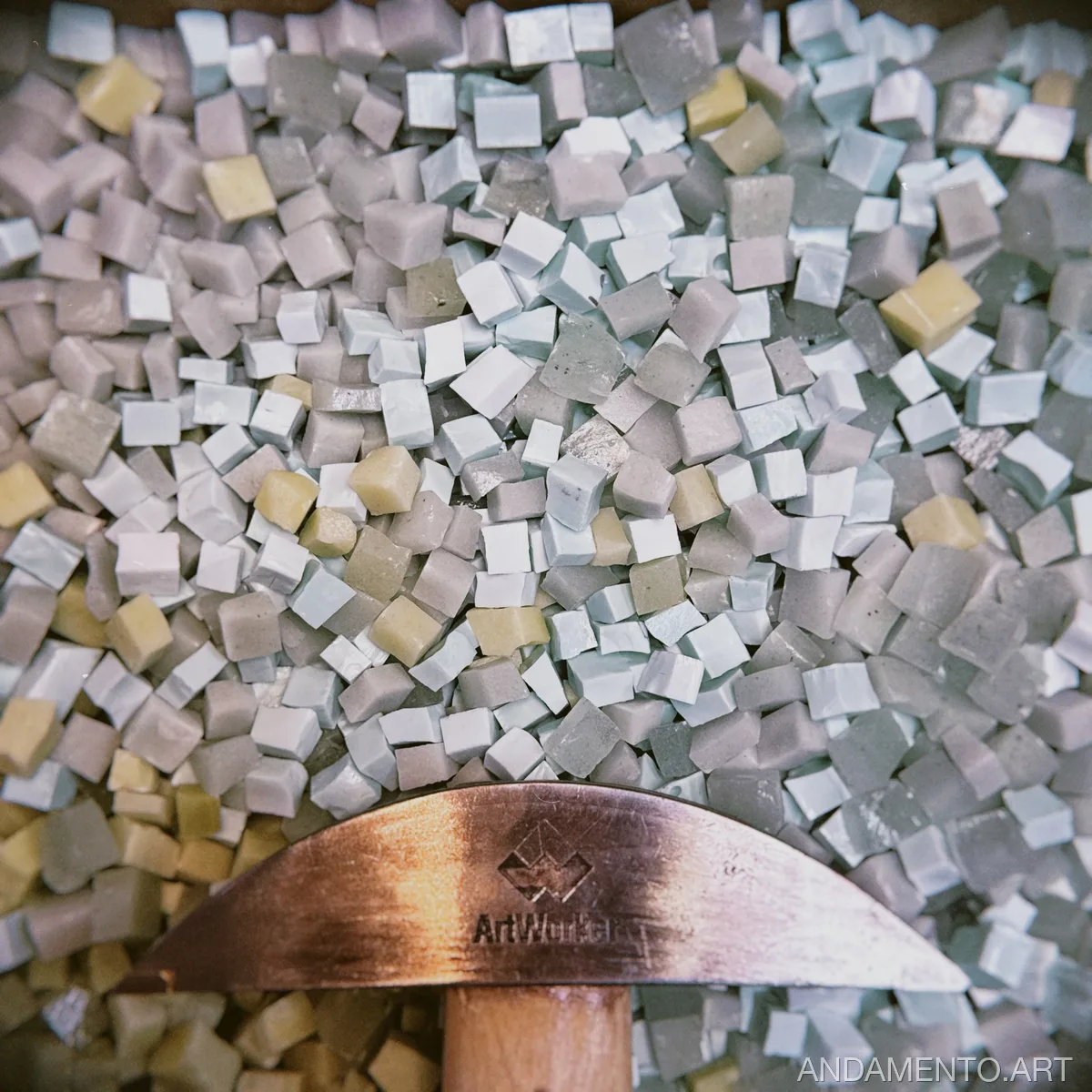
When discussing stone, it’s impossible not to mention one of the most labor-intensive techniques in art history – Pietra Dura ( Florentine mosaic). Unlike the classic assembly of small tesserae, this technique uses large plates of semi-precious stones: malachite, lapis lazuli, jasper.
The main feature of this tradition is the jeweler-like precision of fitting the elements. The artisan cuts the pieces so that the seams between them are almost invisible, creating the effect of a complete painting in stone. This technique requires specialized cutting and polishing equipment due to the high density of the stones.
Similar in spirit is the Opus Sectile method, where large, shaped plates of marble or stone are fitted to the shape of the design. This is a more architectural approach, often found in floor panels and decorative inserts in interiors, creating a sense of monumentality and luxury.
Applications: Interior, Facade, and Landscape
The choice of material directly depends on where the work will be located. Natural stone has varying degrees of frost resistance and water absorption.
Interior Solutions. Any stone can be used indoors. Marble and onyx are ideal for walls, countertops, and decorative panels. For floors in hallways and living rooms, granite or dense marble is recommended due to their resistance to abrasion.
Facades and Exterior Works. The requirements for materials are highest here. In climates with temperature fluctuations and frost, only natural stone or smalti can be used. Unlike glass tiles, which can break when water freezes in their pores, granite and dense marble remain stable for decades. Facade mosaics made of stone do not fade in the sun and are resistant to precipitation.
Landscape Design. Slate, pebbles, and travertine are often chosen for decorating garden paths, fountains, and gazebos. These materials blend harmoniously into the natural landscape, without creating visual conflict with the surrounding environment.
Stone Processing and Selection Techniques
Working with stone requires a different approach than working with glass. Stone is more capricious to chip and requires careful preparation.
Two main methods are used to create tesserae:
1. Chipping with nippers. Suitable for soft stones (limestone, some types of marble). Allows for a lively, “torn” edge.
2. Cutting with a disc. Used for granite and onyx. Allows for the creation of perfectly straight geometric shapes, which are necessary for the Opus Sectile technique.
Special attention should be paid to color selection. Natural stone is heterogeneous: the same block of marble can contain veins of different colors. To avoid “blotches” in the work, professionals use the method of pre-laying all elements on cardboard before final fixation with adhesive.
To simplify the process, you can use Blend kits, where tesserae from different types of stone are already mixed into harmonious compositions, allowing for natural color transitions without lengthy material searches.
Care, Protection, and Durability
Despite its strength, natural stone is a porous material. If protective measures are not taken, it can absorb liquids, leading to hard-to-remove stains.
Protection (Impregnation). For all stone works, especially in bathrooms or kitchens, treatment with water repellents is mandatory. Special impregnations fill the pores of the stone, creating an invisible barrier against water and grease, while still allowing the material to “breathe.”
Cleaning Rules. Stone is extremely sensitive to chemicals.
— It is forbidden to use products containing acids (vinegar, citric acid), as they literally “corrode” limestone and marble, destroying the polish.
— Do not use abrasive powders and stiff brushes, which leave micro-scratches.
— The optimal method is wiping with a soft damp cloth using neutral pH cleaners.
Material Cost and Economic Calculation
The price of natural stone for mosaics varies widely and depends on the rarity of the stone and the complexity of its processing. Limestone and slate belong to the budget segment and are often used in large projects or for training.
Marble and travertine occupy the mid-price segment. The cost here often depends on the grade: for example, white Carrara marble will be significantly more expensive than ordinary gray marble. The most expensive are onyx and semi-precious stones, as their extraction is limited, and the cutting process requires expensive diamond tools.
When calculating the budget, it is important to consider not only the cost of the stone itself but also the consumption of protective compounds and high-quality adhesive. For stone, it is recommended to use compounds with high adhesion, such as Kerabond T with the addition of Isolastic, to ensure a reliable bond with heavy elements.
Related Works in the Gallery:
All materials from this article are available at artworker.shop – from budget Blend kits to premium marble and professional tools. Delivery is available throughout Russia, with packaging options for any task.
Read also:
- Roman Mosaic: Secrets of the Ancient Stone Technique
- Choosing Adhesive and Grout for Stone Mosaics
- andamento.app/calculator/materials”>How to Calculate the Amount of Stone for Your Project