META: Explore the world of mosaic murals in public art. Discover the planning, design, and installation processes for large-scale mosaic projects, materials, techniques, and inspiring examples from ancient Mesopotamia to modern masterpieces. Learn about creating impactful public mosaic art.
Мозаичные панно — Creating Mosaic Murals: Large-Scale Public Art Projects
Mosaic murals stand as a testament to human creativity and endurance, transforming ordinary public spaces into vibrant galleries of art and narrative. These monumental works, often spanning hundreds of square meters, captivate viewers with their intricate detail and lasting beauty. From ancient civilizations to contemporary urban landscapes, mosaic murals offer a unique blend of artistic expression and architectural integration. This article delves into the fascinating process of creating large-scale mosaic murals for public spaces, covering everything from initial planning and design to the intricate installation challenges and the selection of durable materials.
The Enduring Legacy of Mosaic Murals in Public Art
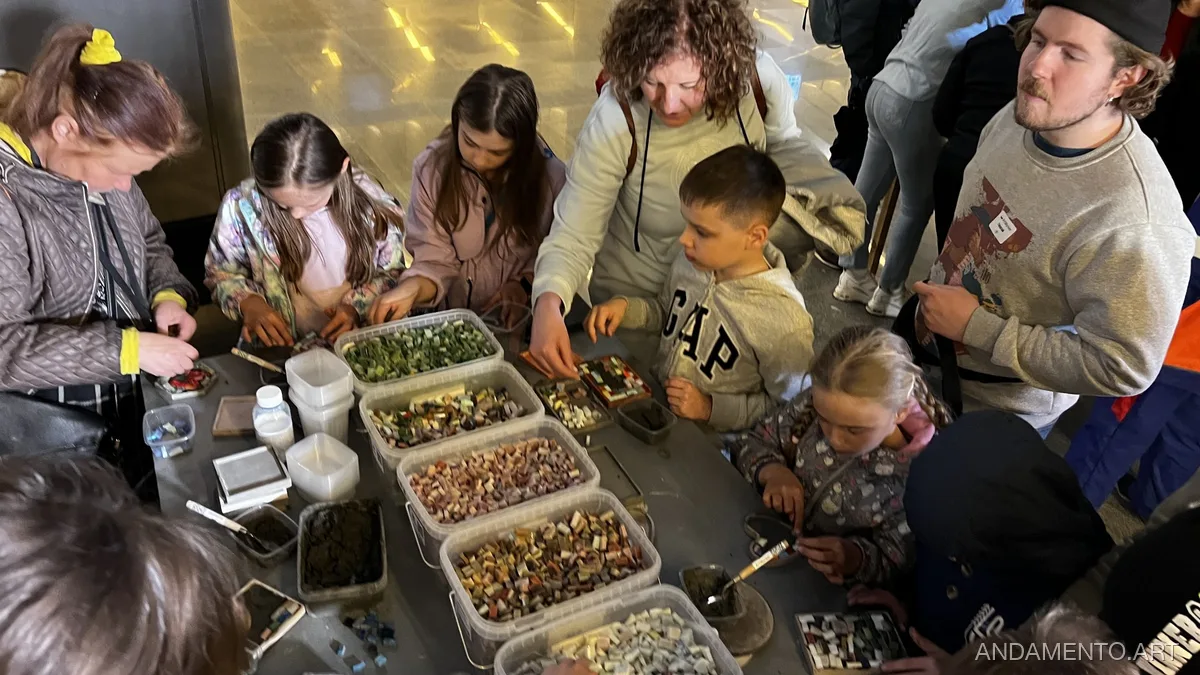
The history of mosaic art is deeply intertwined with public spaces, dating back millennia. One of the earliest known mosaic panels, discovered in Mesopotamia, dates to approximately 3000 BC, showcasing humanity’s long-standing desire to adorn communal areas. Throughout Roman and Byzantine eras, mosaics became a powerful medium for storytelling and religious iconography, gracing floors, walls, and domes of temples, villas, and public baths. These early Roman mosaics demonstrated remarkable durability, with many surviving to this day.
In the 20th century, Soviet monumental mosaics emerged as a distinct form of public art, often reflecting ideological themes and national achievements. A prime example is the “Cosmic Odyssey” mosaic in the Moscow Metro, covering over 1000 square meters. Today, cities like Ravenna (Italy) and Seville (Spain) are celebrated as “mosaic cities” due to their rich abundance of mosaic artwork. This enduring legacy highlights the power of mosaic murals to transcend time, conveying messages and beauty across generations.
 mosaic mural depicting a historical scene” width=”800″ height=”500″/>
Caption: A fragment of an ancient Roman mosaic mural, demonstrating the intricate detail and historical narrative common in early public art.
Planning and Designing Monumental Mosaic Murals
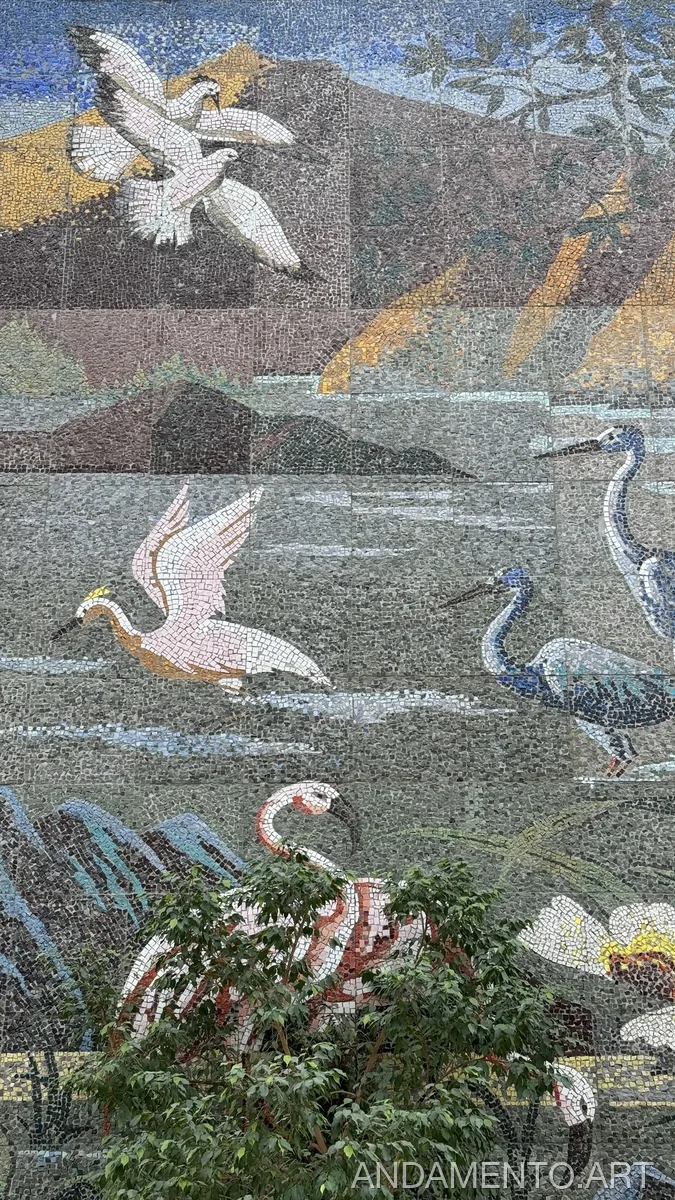
Creating large-scale mosaic murals for public art projects is a complex undertaking that requires meticulous planning and thoughtful design. The process begins with careful site selection, considering factors such as the location’s visibility, audience interaction, and environmental conditions. Structural considerations are paramount; the condition of the wall or surface, as well as the weight of the mosaic materials, must be thoroughly assessed to ensure long-term stability.
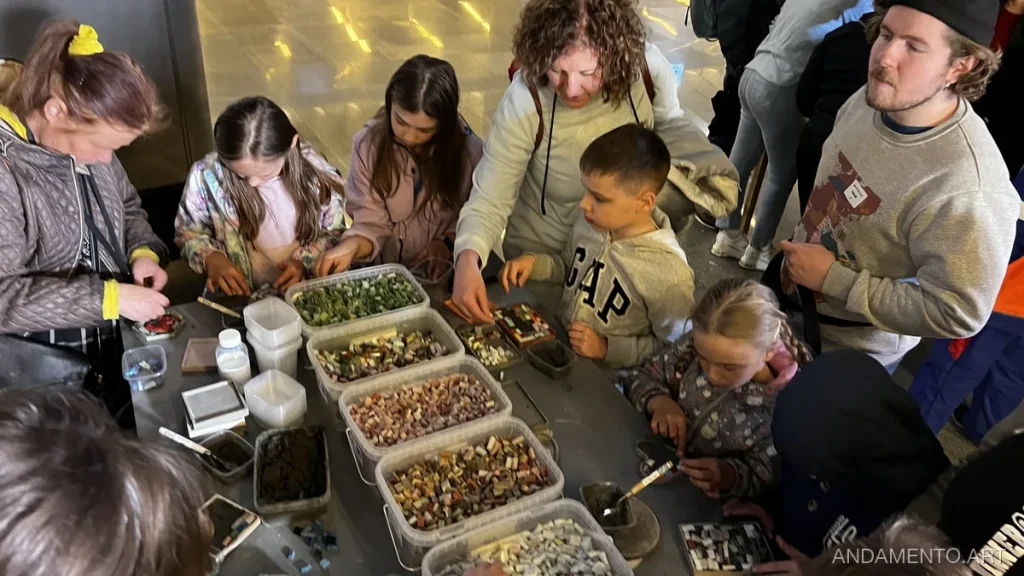
Conceptualization often involves collaboration between artists, architects, and community stakeholders to develop a design that resonates with the space and its purpose. Once the artistic vision is clear, a detailed “cartoon” (картон) or full-scale template is created. This template serves as the blueprint for the entire mosaic, guiding the placement of each individual tessera. For large mosaic murals, this template can be a massive undertaking itself, often printed in sections. Color theory and composition are crucial at this stage, as the artwork must maintain visual impact and clarity from varying distances. Tools like andamento.app can assist artists in visualizing how their designs will translate into mosaic, aiding in color and material selection.

Caption: Artists diligently working on a large-scale cartoon, the essential template for an upcoming mosaic mural in a public park.
Materials and Durability for Outdoor Mosaic Murals
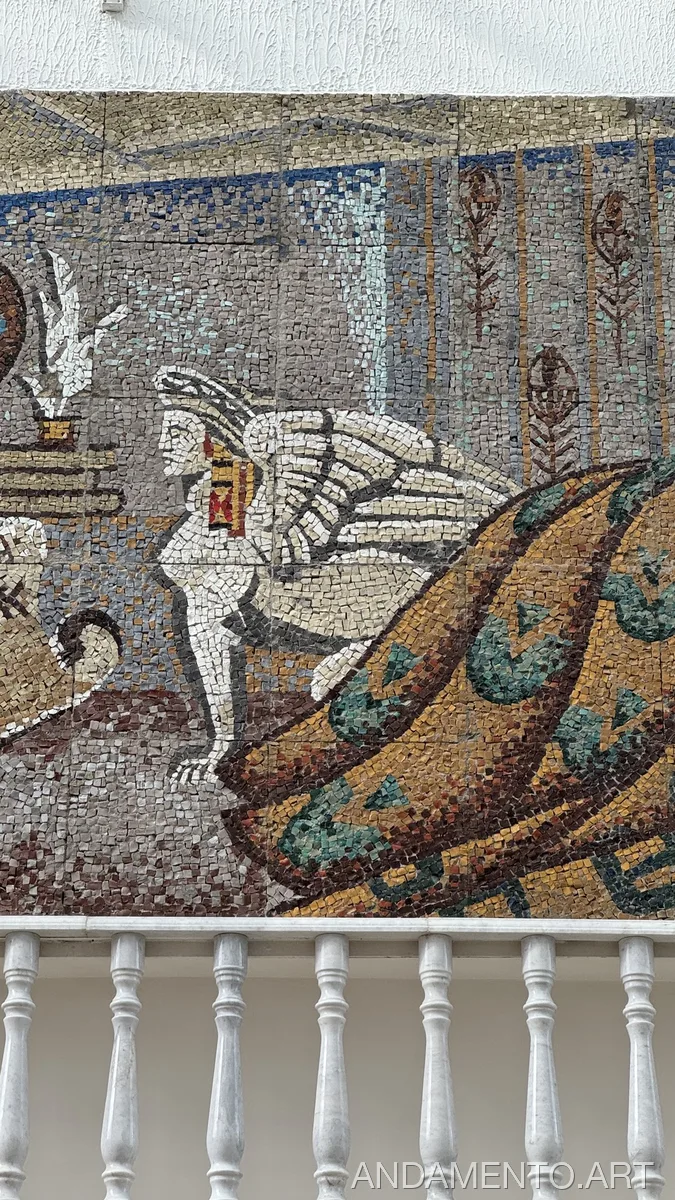
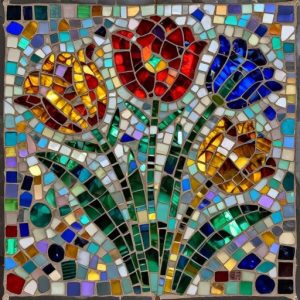
The choice of materials is critical for building facade mosaics and other public art installations, as they must withstand various environmental stressors, including temperature fluctuations, moisture, and UV radiation. Traditionally, durable materials such as smalti (opaque glass), natural stone (marble, travertine, granite), and ceramic have been favored for their longevity. Smalti, in particular, boasts zero water absorption and is completely frost-resistant, making it an ideal choice for outdoor and humid environments like swimming pools and hammams. It also never fades or changes color over time, ensuring the vibrant hues of the smalti for mosaics remain intact for centuries.
Modern mosaic murals also incorporate a wider array of materials, including mirrors, metal, plastic, and even recycled components, offering new textures and visual effects. ArtWorker’s own smalti collections, such as the V3.2 palette with 163 repeatable colors and the unique MELTI line with 24 experimental shades, provide artists with a vast spectrum of high-quality, durable options. For natural stone for mosaics, options like marble, travertine, and slate each offer unique aesthetic properties, though stone may require sealing for wet areas.
Equally important are the mosaic adhesives and grouts. For outdoor, facade, and pool projects, a high-performance cement-based adhesive like Kerabond T mixed with Isolastic plasticizer (achieving a C2S2 classification) is essential for elasticity and strong adhesion. Epoxy grout, such as Diamant, is mandatory for wet areas due to its chemical resistance and impermeability, ensuring the mosaic’s integrity against water and chemicals. It’s crucial to remember that materials like glass tiles, ceramics, and wood are generally unsuitable for outdoor use in climates with freezing temperatures, as they can break down over time.
 natural stone for mosaic murals” width=”800″ height=”500″/>
Caption: A rich selection of smalti and natural stone, showcasing the diverse material palette available for creating durable and visually stunning mosaic murals.
Techniques and Installation: Overcoming Scale Challenges
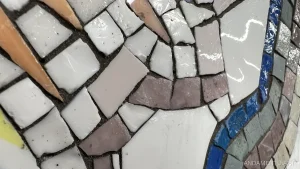
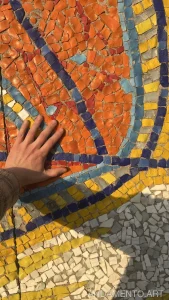
The creation of large-scale mosaic murals involves specialized techniques to manage the size and ensure a high-quality finish. Two primary methods are commonly employed: direct and indirect (reverse) setting. The direct method involves laying tesserae face-up directly onto the adhesive on the substrate. While simpler for smaller works and ideal for beginners, it can result in an uneven surface and is challenging for very large installations. The indirect method, conversely, is preferred for monumental projects. Tesserae are laid face-down onto a temporary backing (such as paper or Oracal film) in sections, then transferred and mounted onto the permanent surface. This technique allows for a perfectly smooth surface and simplifies on-site installation, as large sections can be prefabricated in a studio.
The double indirect method offers a hybrid approach, allowing for visual control during the laying process while still achieving a smooth final surface. Regardless of the technique, precision is key. Artists use essential mosaic tools like Montolit disc nippers for smalti and glass, or the traditional hammer and hardy for a more organic break in smalti and stone. Working in manageable sections is vital for large mosaic murals, both for fabrication and for transportation and installation logistics. Scaffolding and safety protocols are paramount during the on-site mounting, which can often be the most challenging phase of a public art project due to height and environmental factors.

Работы по теме в галерее:
Caption: An experienced mosaic artist carefully installs a pre-fabricated section of a large public mosaic mural, showcasing the precision required for monumental works.
Inspiring Mosaic Murals and Contemporary Trends
The world is rich with inspiring mosaic murals that demonstrate the versatility and impact of this